
Knowledge Vault Blog

The Knowledge Vault Blog

Forensic Science. Criminal Defense Strategy. The Law Behind the Law.

View Blog Posts

Welcome to the Knowledge Vault Blog — where the attorneys, scientists, and forensic experts at Deandra Grant Law share what we know. This is not a typical law firm blog. It is a research library built by practitioners who teach forensic science courses, grade certification exams, and testify as experts in courtrooms across Texas.

Our Managing Partner, Deandra Grant, holds a Master’s Degree in Pharmaceutical Science, teaches the ACS-CHAL Forensic Lawyer-Scientist courses at Axion Analytical Labs, serves on the faculty of the Borkenstein Drug Course at Indiana University, and chairs the DUI Defense Lawyers Association’s national Board Certification program. She is a member of the American Academy of Forensic Sciences, the American Chemical Society, the Society of Toxicology, and the International Association of Forensic Science Consultants. Partner Douglas Huff brings ACS-CHAL credentials and Garrett Discovery digital forensics training. Federal Defense Attorney James Lee Bright contributes decades of experience in federal criminal practice.

Inside the Knowledge Vault you will find:

Hot Takes – The latest on high profile trials, changes to the law, rulings by the Supreme Court and forensic science news.

Forensic Science & DWI Defense — Deep analyses of blood and breath testing science, GC-FID instrument calibration, partition ratio variability, in vitro fermentation, retrograde extrapolation, and the pharmacokinetics of drug impairment. Written by attorneys who don’t just challenge the science — they teach it.

Field Sobriety Test Analysis — The history, validation research, and scientific limitations of the NHTSA Standardized Field Sobriety Tests, written by a certified SFST Instructor who was the first attorney in Texas to pass the Forensic Sobriety Assessment Certification exam.

Federal Criminal Defense — Guides to federal conspiracy, sentencing guidelines, proffer sessions, grand jury investigations, asset forfeiture, and the critical differences between state and federal prosecution. Written by attorneys who practice in federal courts across Texas.

Digital Forensics & Electronic Evidence — How cell phone location data, social media records, body cameras, call detail records, and computer forensics affect criminal cases — and how to challenge them.

Sex Crime Defense — Outcry witnesses, SANE exams, DNA evidence challenges, false accusations, registry implications, and defense strategies for the most serious allegations.

Emerging Science & Policy — Roadside cannabis testing technology, marijuana rescheduling and federal sentencing, Canadian travel after DWI, and the evolving intersection of science, law, and public policy.

Texas Criminal Courts & Local Practice — County-by-county courts guides, DA office profiles, courthouse walkthroughs, and city-specific enforcement patterns across Dallas, Collin, Denton, Tarrant, Rockwall, and McLennan counties.

Every article in the Knowledge Vault is written or reviewed by the attorneys at Deandra Grant Law.

We don’t publish filler. We publish the analysis we wish existed when we were building our own expertise and the information our clients deserve to have access to before they walk into a courtroom.

If you are facing criminal charges or a DWI in Texas and want to speak with the attorneys behind this work, call (214) 225-7117 or visit our Schedule an Appointment page for a free, confidential consultation.

Knowledge Vault Blog

Wiretap Evidence in Federal Cases: How It Works and How to Challenge It

Wiretap Evidence in Federal Cases: How It Works and How to Challenge It

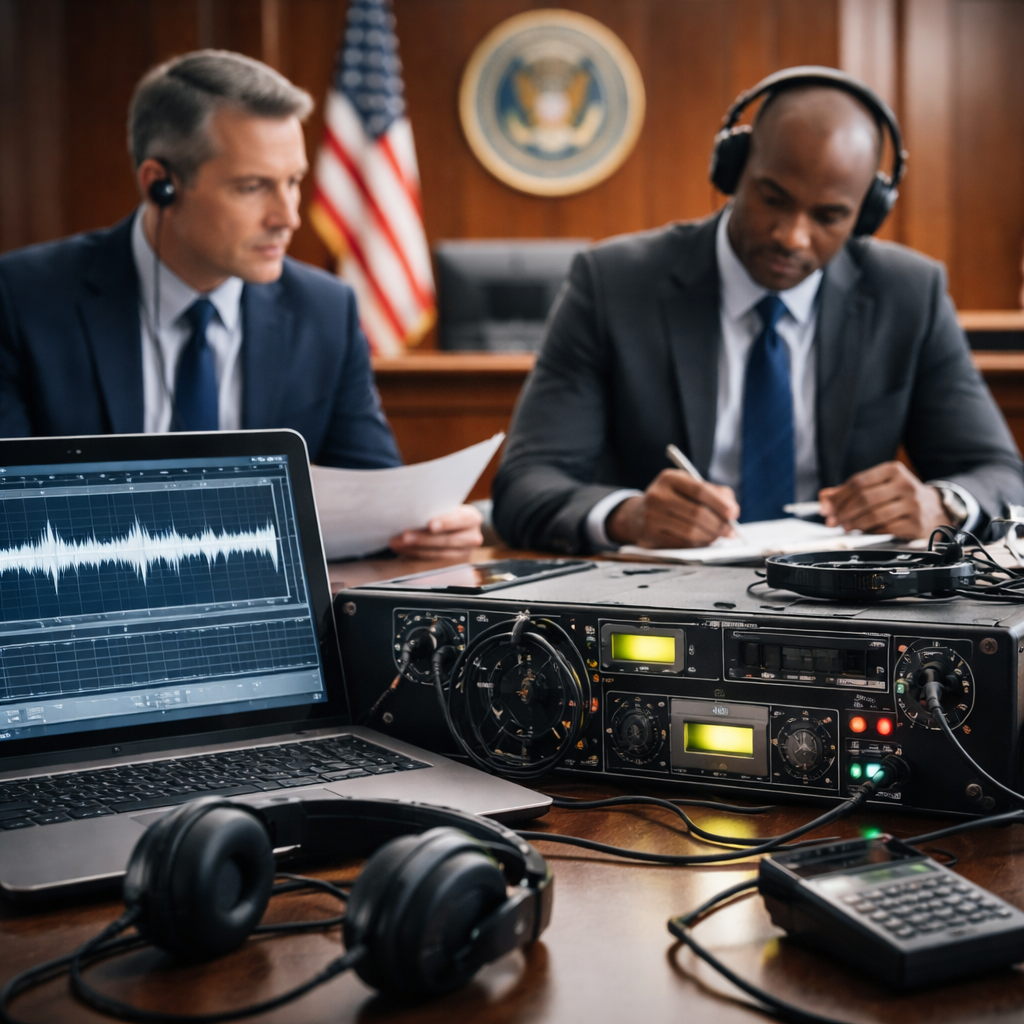
Wiretap evidence is among the most powerful tools in the federal prosecutor’s arsenal. Intercepted phone calls, text messages, and electronic communications can provide direct evidence of criminal agreements, drug transactions, and organizational structure in ways that no other type of evidence can. When a federal jury hears a defendant’s own voice discussing a drug deal […]

Federal Aggravated Identity Theft: The 2-Year Sentence That Gets Stacked on Other Charges

Federal Aggravated Identity Theft: The 2-Year Sentence That Gets Stacked on Other Charges

Among the federal charges that clients encounter, 18 U.S.C. §1028A — aggravated identity theft — may be the most misunderstood and the most dangerous. It does not carry the longest potential sentence. It does not make headlines the way drug trafficking or fraud charges do. But it carries a feature that makes it one of […]

DWI Enforcement in North Texas: Which Agencies, Which Highways, Which Counties — and Why It Matters Where You’re Arrested

By Deandra Grant, J.D., M.S. (Pharmaceutical Science), ACS-CHAL Forensic Lawyer-Scientist Where you are arrested for DWI in North Texas determines nearly everything about your case: which agency made the arrest, which prosecutor files the charges, which court hears the case, which judges and prosecutors you are dealing with, what the local plea practices look like, […]
The Federal Grand Jury Process: What Texas Defendants Need to Know

The Federal Grand Jury Process: What Texas Defendants Need to Know

If you have received a federal grand jury subpoena, or if you have learned that a federal grand jury is investigating activity connected to you, you are facing one of the most powerful tools in the federal government’s arsenal. The federal grand jury operates in secrecy, with broad investigative authority and few checks on its […]

Federal Drug Crimes in Texas: Trafficking, Distribution, and Mandatory Minimums

Federal Drug Crimes in Texas: Trafficking Distribution and Mandatory Minimums

Texas is one of the most active states in the country for federal drug prosecutions. The state’s 1,254-mile border with Mexico, its network of interstate highways, and its major metropolitan areas make it a focal point for federal drug enforcement operations. The Drug Enforcement Administration (DEA), the FBI, Homeland Security Investigations (HSI), and the Bureau […]

What Happens During a Federal Criminal Investigation in Texas

What Happens During a Federal Criminal Investigation in Texas

Most people who are the target of a federal criminal investigation don’t know it’s happening until it’s too late. That’s by design. Federal agencies like the FBI, DEA, ATF, IRS Criminal Investigation Division, and Homeland Security Investigations spend months—sometimes years—building cases before making a single arrest. By the time you see the agents at your […]

Understanding Federal Conspiracy Charges in Texas

Understanding Federal Conspiracy Charges in Texas

Of all the charges the federal government brings against defendants in Texas, conspiracy may be the most misunderstood—and the most dangerous. A federal conspiracy charge does not require that you actually committed the underlying crime. It does not require that the crime was ever completed. All the government needs to prove is that you agreed […]

Federal vs. State Charges in Texas: Understanding the Critical Differences

Federal vs. State Charges in Texas: Understanding the Critical Differences

If you’ve just learned that you’re facing federal charges instead of state charges—or that your case has been “picked up” by the feds—your first reaction is probably fear. That reaction is justified. Federal cases operate under an entirely different system than what most people imagine when they think of criminal court, and the consequences are […]

A Guide on Federal Sentencing

A Guide for Defendants and Families The Federal Sentencing System Is Not What Most People Expect If you or someone you love is facing federal criminal charges, you have probably already started searching for answers about what kind of sentence to expect. The numbers you find online can be terrifying. Federal conviction rates exceed 90 […]

When a DWI Crash Becomes a Felony: Intoxication Assault in Texas

When a DWI Crash Becomes a Felony: Intoxication Assault in Texas

Texas Penal Code § 49.07 defines intoxication assault as causing serious bodily injury to another person while operating a motor vehicle, aircraft, watercraft, or amusement ride while intoxicated. It is a third-degree felony in most cases and carries the potential for prison time, steep fines, and long-term consequences. A conviction can follow you for life, […]