
Home »
Do You Need Legal Help?
ARVE error: <a href="https://nextgenthemes.com/plugins/arve/documentation/installation/">ARVE Pro</a> license not activated or valid

"Deandra Grant Law fights hard for their clients and is always willing to go above and beyond. They are the best firm for DWI cases in DFW and beyond. Definitely hire them to represent you in any pending cases."
- P. Williams
"Deandra Grant made a tough situation so much better. She listened to my concerns and helped me so much with my case. I would recommend her to anyone needing legal services."
- M. Haley
"Deandra Grant Law handled my case with diligence and professionalism. Deandra Grant's reputation is stellar and now I know why. She has a team of individuals who provide quality service."
- N. Coulter
As Seen On






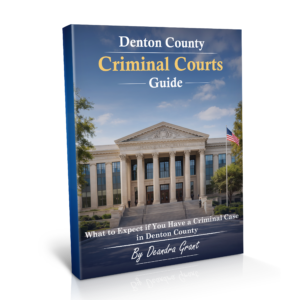
Denton County Criminal Courts Guide
By Attorney Deandra Grant
If you’re facing a criminal charge in Denton County, understanding how the local courts work can make the process far less confusing. This guide explains where cases are heard, what each court handles, and what you can expect as your case moves through the system.
Read NowLewisville Hit and Run DWI Lawyers
Texas does not have a “hit and run” offense by that name. What gets prosecuted as a hit-and-run DWI is actually two separate charges (a DWI under Penal Code §49.04 and a Failure to Stop and Render Aid (FSRA) charge under Transportation Code Chapter 550) prosecuted together in the same case. The two charges have completely different elements and separate punishment ranges, which means the strategic decisions on one often differ from the strategic decisions on the other.
The FSRA side of the case can exceed the DWI side by a wide margin. FSRA after an accident involving personal injury is a third-degree felony under §550.021 (2 to 10 years in TDCJ). FSRA involving serious bodily injury or death is a second-degree felony (2 to 20 years). These penalty ranges are unrelated to the DWI charge itself meaning a first-offense misdemeanor DWI combined with an injury FSRA can produce felony exposure that the DWI alone would not.
Hit and run DWI charges arising in Lewisville are prosecuted by the Denton County District Attorney’s Office at the Denton County Courthouse, 1450 E. McKinney Street, Denton, TX 76209. Many Lewisville-area accident cases arise on I-35E, SH-121 (Sam Rayburn Tollway), FM-3040, and the western terminus of the President George Bush Turnpike, as well as on the commercial streets running through the I-35E retail corridor, Old Town Lewisville, and the Vista Ridge shopping and restaurant area.
Deandra Grant Law has defended hit and run DWI charges in Denton County for more than 30 years. Managing Partner Deandra Grant is a trained SFST instructor and holds the ACS-CHAL Forensic Lawyer-Scientist designation along with a Master of Science in Pharmaceutical Science and a Graduate Certificate in Forensic Toxicology. Partner Douglas Huff holds the same ACS-CHAL designation and has completed advanced digital forensics training.
Failure to Stop and Render Aid — Transportation Code Chapter 550
The controlling statute for the “hit and run” portion of a DWI case is Transportation Code Chapter 550. The duties imposed on any driver involved in a motor vehicle accident:
§ 550.021— Accident Involving Personal Injury or Death
The principal FSRA statute. A driver involved in an accident resulting in injury or death must:
- Immediately stop the vehicle at the scene or as close as possible;
- Return to the scene immediately if not possible to stop at the scene;
- Determine whether a person is injured in the accident; and
- Remain at the scene until the driver has complied with § 550.023 (duty to provide information and render aid).
- 550.021 is punished according to the outcome of the accident:
- Accident involving death — third-degree felony. 2 to 10 years in prison and a fine of up to $10,000.
- Accident involving serious bodily injury — third-degree felony. 2 to 10 years in prison and a fine of up to $10,000.
- Accident involving bodily injury short of SBI — Class A misdemeanor. Up to 1 year in county jail and a fine of up to $4,000.
§ 550.022 — Accident Involving Damage to Vehicle
A driver involved in an accident resulting in damage to a vehicle driven or attended by another person must stop and comply with § 550.023. Failure to comply is:
- Class B misdemeanor if damage to vehicles is $200 or more (up to 180 days in county jail).
- Class C misdemeanor if damage is less than $200 (fine only).
§ 550.023 — Duty to Give Information and Render Aid
A driver involved in an accident must give to any person involved in the accident:
- Name, address, and vehicle registration number;
- Name of the driver’s insurer, on request;
- Reasonable assistance to any injured person, including transporting or arranging transportation to medical care if apparent or requested.
§ 550.024 — Damage to Fixtures
A driver whose vehicle strikes and damages a sign, utility pole, guardrail, mailbox, fence, or other structure on or near the roadway must take reasonable steps to locate and notify the owner and must report the accident to law enforcement. Violation is a Class B or Class C misdemeanor depending on the damage amount.
Lewisville DWI & Criminal Defense
Criminal Defense DWI Assault BWI Cocaine Defense Drug Crime Defense DUID DWI with CDL Felony DWI Gun Crime Defense Hit & Run DWI Intoxication Assault Multiple DWIs Murder Defense Theft Defense Underage DWI WarrantsRelated Blogs

Ask Deandra: Can I Get a DWI for Marijuana or Edibles in Texas?
texasdwisite.com/blog/ — Prepared June 2026 By Deandra Grant, J.D., M.S. (Pharmaceutical Science), ACS-CHAL Forensic Lawyer-Scientist [...]
Ask Deandra: What’s the Difference Between a DWI and a DUI in Texas?
By Deandra Grant, J.D., M.S. (Pharmaceutical Science), ACS-CHAL Forensic Lawyer-Scientist The question: What’s the difference [...]
Ask Deandra: How Do Police Prove a Drug-Based DWI Without a Blood Test?
The question: How do police prove a drug-based DWI without a blood test? The short [...]

The Complete Guide to Court-Ordered Alcohol Monitoring Devices in Texas DWI Cases
SCRAM, Ignition Interlock, Soberlink, and the New Wave of Wearables — What They Are, Who [...]
Ask Deandra: Can I Be Arrested for DWI in Texas if I’m Under 0.08?
The question: Can I be arrested for DWI in Texas if my BAC is under [...]

Ask Deandra: Should I Answer the Officer’s Questions After a DWI Arrest?
The question: Should I answer the officer’s questions after a DWI arrest? The short answer: [...]

Ask Deandra: Do I Have to Take a Field Sobriety Test in Texas?
The question: Do I have to take a field sobriety test in Texas? The short [...]

Ask Deandra: What Should I Do If I’m Pulled Over and the Officer Thinks I’m Drunk?
The question: What should I do if I’m pulled over and the officer thinks I’m [...]
The DWI Side of the Case
The DWI charge accompanying an FSRA allegation is prosecuted separately under the Penal Code. Depending on the facts:
- §49.04 — Driving While Intoxicated. First-offense Class B misdemeanor; Class A if BAC is 0.15 or above.
- §49.09 — repeat DWI enhancements. Second DWI is Class A misdemeanor; third or subsequent is third-degree felony.
- §49.045 — DWI with Child Passenger. State jail felony when a child under 15 is in the vehicle.
- §49.07 — Intoxication Assault. Third-degree felony for causing serious bodily injury while intoxicated by reason of the intoxication.
- §49.08 — Intoxication Manslaughter. Second-degree felony for causing death while intoxicated by reason of the intoxication. On the CCP Article 42A.054 3g list so judge-granted probation is not available.
The Combined Exposure — Stacked Ranges
A typical hit-and-run DWI case involves parallel charges. Consider a single-defendant case in which a driver with a BAC of 0.12 struck another vehicle, caused a non-life-threatening injury, and left the scene. The charging array could include:
- DWI first-offense, Class B misdemeanor — up to 180 days in county jail, fine up to $2,000.
- FSRA (personal injury) under §550.021 — third-degree felony (2 to 10 years in TDCJ, fine up to $5,000).
The DWI alone would be a misdemeanor. The FSRA alone would be a third-degree felony. Charged together — as they typically are — the case carries third-degree felony exposure with the factual complication of two independent charges. Intoxication Assault under §49.07 may be added depending on the severity of the injury. Resolution of one charge does not automatically resolve the other.
Evading Arrest as a Layered Charge — §38.04
Where the flight from the accident scene continues past the arrival of law enforcement, Penal Code §38.04 Evading Arrest may be charged as a separate offense. Evading on foot is a Class A misdemeanor; evading in a vehicle is a state jail felony (third-degree if a prior evading conviction; second-degree if it causes serious bodily injury; first-degree if it causes death). This is an independent charge that carries its own exposure on top of the DWI and FSRA.
Defense Strategies in Denton County Hit and Run DWI Cases
The knowledge element on FSRA. FSRA under §550.021 requires that the driver knew or should have known of the accident and the injury. A driver who genuinely did not know they had been in an accident (because of low-speed contact, limited visibility, ambient noise, or distraction) has a possible defense to the FSRA charge that may not exist on the DWI charge. This is where careful investigation of the accident scene, vehicle damage patterns, and contemporaneous communications matters.
Identity. Where the state must prove that the defendant was the driver, identification issues can arise. Vehicle ownership is not enough; the state must prove the defendant was operating the vehicle at the time of the accident. Surveillance video, witness descriptions, and forensic identification sometimes tell a different story than the state’s initial theory.
Necessity and emergency. Under Penal Code §9.22, conduct otherwise constituting an offense is justified if the actor reasonably believes it is immediately necessary to avoid imminent harm. An emergency (such as leaving the scene briefly to avoid a secondary accident, to reach medical assistance, or because of a credible threat of violence at the scene) may support a necessity defense in the FSRA charge.
Separating the two charges. Because the DWI and FSRA are separate offenses, defense strategies often diverge. The DWI defense turns on probable cause for the stop, field sobriety testing, and forensic analysis of the chemical test. The FSRA defense turns on whether the driver knew or should have known of the accident and whether the state can prove the driver’s identity as the operator at the time of the accident. Each set of issues may support different resolutions.
Forensic challenges on DWI. Ethanol analysis in Texas is performed by headspace GC-FID at the DPS Crime Lab in Garland. Blood drawn long after the accident (particularly in hit-and-run cases where there may be hours between the accident and the test) raises retrograde extrapolation questions about BAC at the time of driving versus BAC at the time of testing. These are contestable issues that often determine whether the DWI charge holds.
Article 38.23 — no good faith exception. Stops, searches, arrests, and blood warrants are all subject to constitutional review. Texas’s exclusionary rule carries no good faith exception so evidence from an unlawful investigation is suppressible regardless of what it shows. Suppression motions apply to both the DWI and the FSRA investigation.
Civil Liability and Bankruptcy Non-Dischargeability
Beyond the criminal case, a hit-and-run DWI accident exposes the defendant to significant civil liability:
- Compensatory damages under Texas Civil Practice and Remedies Code Chapter 41 — medical expenses, property damage, lost wages, pain and suffering.
- Exemplary (punitive) damages under §41.003 for gross negligence. Intoxicated driving that leaves the scene is often treated as gross negligence per se for exemplary-damages purposes.
- Auto insurance policy exclusions for DWI-related accidents, which may leave the defendant personally liable for uninsured damages.
- Civil judgment non-dischargeability in bankruptcy under 11 U.S.C. §523(a)(9) a judgment for death or personal injury caused by operation of a motor vehicle while intoxicated cannot be discharged in bankruptcy. The civil judgment follows the defendant indefinitely.
ALR and Driver’s License Consequences
On top of the criminal and civil consequences, the Administrative License Revocation process applies in the standard DWI ways:
- Failed test: 90-day ALR suspension on a first failed test (longer on repeats).
- Refusal: 180-day ALR suspension on a first refusal (2 years on a repeat).
- ALR deadline: 15 days from the date of notice of suspension.
- Criminal-court license suspension on conviction: 90 days to 1 year (first DWI), longer on repeats.
- FSRA conviction can trigger independent driver’s license suspension under Transportation Code §521.312.
Why Deandra Grant Law for Lewisville Hit and Run DWI Defense
-
- Office in Denton. 30+ years in Denton County courts. 500+ trials to verdict. The Denton County Courthouse and the Denton County DA’s office are familiar ground.
- Trained SFST Instructor — Deandra Grant. Field sobriety test administration, scoring, and interpretation challenged in every case.
- ACS-CHAL Forensic Lawyer-Scientist — Deandra Grant and Douglas Huff. Chemical testing and the State’s forensic evidence evaluated at the chemistry level.
- Digital forensics training — Douglas Huff. Accident reconstruction digital evidence, vehicle telematics, surveillance footage, and cell phone records evaluated at the technical level.
- Article 38.23 — no good faith exception. Every hit-and-run DWI case begins with the lawfulness of the stop, search, or seizure.
- Federal defense capability. James Lee Bright handles federal cases in the Eastern District of Texas (Sherman Division).
- 17 published law books. Including The Texas DWI Manual
- Texas Super Lawyer since 2011.
- AV® Preeminent rated by Martindale-Hubbell®.
If you are facing hit and run DWI charges in Denton County, call (214) 225-7117 for a free, confidential consultation. Or schedule online at texasdwisite.com.
Client Reviews

“Deandra Grant Law – Criminal & DWI Defense handled my case with diligence and professionalism. Deandra Grant’s reputation is stellar and now I know why. She has a team of individuals who provide quality service.”