
Home »

Do You Need Legal Help?

"Deandra Grant Law fights hard for their clients and is always willing to go above and beyond. They are the best firm for DWI cases in DFW and beyond. Definitely hire them to represent you in any pending cases."
- P. Williams
"Deandra Grant made a tough situation so much better. She listened to my concerns and helped me so much with my case. I would recommend her to anyone needing legal services."
- M. Haley
"Deandra Grant Law handled my case with diligence and professionalism. Deandra Grant's reputation is stellar and now I know why. She has a team of individuals who provide quality service."
- N. Coulter
As Seen On







Denton County Criminal Courts Guide
By Attorney Deandra Grant
If you’re facing a criminal charge in Denton County, understanding how the local courts work can make the process far less confusing. This guide explains where cases are heard, what each court handles, and what you can expect as your case moves through the system.
Read NowLewisville Intoxication Assault Attorneys
Intoxication Assault is a DWI with serious bodily injury and under Texas law, it is prosecuted not as an enhanced DWI but as a stand-alone third-degree felony under Penal Code §49.07. The charge carries 2 to 10 years in TDCJ, a fine up to $10,000, and (where the vehicle is found to be a deadly weapon) a deadly weapon finding under CCP Article 42A.054 that restricts parole eligibility to 50 percent of the calendar time served. Statutory enhancements can elevate the offense to a second-degree or even first-degree felony depending on the victim’s status and the nature of the injury. For a driver with no prior DWI history, Intoxication Assault takes what would have been a Class B misdemeanor DWI and transforms it into felony exposure that dramatically changes the sentencing math.
Three structural facts shape every Intoxication Assault case:
- It is a Chapter 49 offense, not a Chapter 22 assault. Under Penal Code §19.06 and the architecture of Title 10 (Intoxication Offenses), §49.07 is carved out of both the assault framework in Chapter 22 and the homicide framework in Chapter 19. This matters for charging, for lesser-included analysis, and for defense strategy.
- Causation is a distinct element governed by Penal Code §6.04. The State must prove not only that the defendant was intoxicated and that serious bodily injury occurred, but that the injury would not have occurred but for the defendant’s conduct. The but-for standard has a specific concurrent-cause exception that can defeat the charge.
- A deadly weapon finding on the vehicle is contestable, not automatic. Texas courts have repeatedly held that a deadly weapon finding requires specific evidence about the manner of use and not merely the fact of a collision. The Sierra two-part analysis, the Foley five factors, and cases like Couthren v. State and Pointe v. State make this a meaningful point of defense advocacy.
Intoxication Assault charges arising in Lewisville are prosecuted by the Denton County District Attorney’s Office at the Denton County Courthouse, 1450 E. McKinney Street, Denton, TX 76209. Many Lewisville cases originate from accidents on I-35E, SH-121 (Sam Rayburn Tollway), FM-3040, and the western terminus of the President George Bush Turnpike (Lewisville’s primary commuter and commercial corridors, including I-35E as one of the busiest north-south routes in North Texas) as well as from the commercial districts around Old Town Lewisville, Vista Ridge, and the I-35E retail corridor. Lake Lewisville and Grapevine Lake are also frequent locations for boating-related Chapter 49 cases. Federal aspects of a case, where applicable, are prosecuted in the Eastern District of Texas (Sherman Division). State-level appeals from Denton County criminal cases go to the Second Court of Appeals (Fort Worth). Deandra Grant Law’s Denton office serves Lewisville and the rest of Denton County directly with 30+ years of practice in Denton County courts. The Denton County Courthouse and the Denton County DA’s office as familiar ground. DGL’s office is directly across the street from the courthouse. Managing Partner Deandra Grant is a trained SFST instructor, holds the ACS-CHAL Forensic Lawyer-Scientist designation, and brings a Master of Science in Pharmaceutical Science and a Graduate Certificate in Forensic Toxicology. Partner Douglas Huff holds the same ACS-CHAL designation and has completed digital forensics training applicable to accident reconstruction evidence, vehicle telematics, and surveillance footage.
The Statute — Texas Penal Code §49.07
- 49.07(a)(1) defines Intoxication Assault as operating a motor vehicle in a public place, an aircraft, a watercraft, or an amusement ride while intoxicated and, by reason of that intoxication, causing serious bodily injury to another. The State must prove the following elements:
- A person
- By accident or mistake
- Operated a motor vehicle (or aircraft, watercraft, or amusement ride)
- In a public place
- While intoxicated — the same definition used in DWI cases under §49.01(2) BAC of 0.08 or higher, or loss of the normal use of mental or physical faculties by reason of alcohol, a controlled substance, a drug, a dangerous drug, or a combination of substances
- By reason of that intoxication caused serious bodily injury to another
Each element is independently contestable. The defense does not have to refute all of them to win — any one element not proved beyond reasonable doubt defeats the charge.
Statutory Enhancements — §49.09(b-1), (b-2), (b-4)
The third-degree felony baseline is not the ceiling. Penal Code §49.09 sets out specific statutory enhancements that elevate Intoxication Assault based on the victim’s status or the nature of the injury:
- §49.09(b-1)(1) — Firefighter or EMS personnel in discharge of official duty: Elevated to a second-degree felony (2 to 20 years in TDCJ, fine up to $10,000).
- §49.09(b-1)(2) — Peace officer or judge in discharge of official duty: Elevated to a first-degree felony (5 to 99 years or life, fine up to $10,000). This is a dramatic escalation from the baseline third-degree exposure.
- §49.09(b-4) — Traumatic brain injury resulting in persistent vegetative state: Elevated to a second-degree felony (2 to 20 years in TDCJ). This enhancement applies where the SBI specifically takes the form of a TBI leaving the victim in a persistent vegetative state.
Whether an enhancement applies is a factual and legal question the State must prove. Victim status (on-duty vs. off-duty, “in discharge of official duty”), the medical characterization of an injury as TBI-PVS versus other serious brain injury, and the nexus between the victim’s role and the incident are all contestable. The difference between a third-degree felony and a first-degree felony is the difference between a 10-year maximum and a 99-year maximum.
Serious Bodily Injury — Texas Penal Code §1.07(46)
The definition of “serious bodily injury” is not intuitive. Under Penal Code §1.07(46), serious bodily injury means bodily injury that:
- Creates a substantial risk of death; or
- Causes death; or
- Causes serious permanent disfigurement; or
- Causes protracted loss or impairment of the function of any bodily member or organ.
The SBI definition is a frequent point of litigation. Texas courts have repeatedly held that severe-looking injuries do not automatically meet the statutory threshold:
- Williams v. State, 696 S.W.2d 896 (Tex. Crim. App. 1985) — wounds caused by knives or firearms are not per se SBI. Where a complainant did not testify about the extent of a gunshot wound, the evidence was insufficient to prove SBI.
- Hernandez v. State, 946 S.W.2d 108 (Tex. App.—El Paso 1997, no pet.) — a one-inch abdominal scar from a stab wound that lacerated the complainant’s liver did not establish serious permanent disfigurement.
- Andrus v. State, 2010 WL 797196 (Tex. App.—Dallas 2010) — a fractured clavicle that caused the complainant to lose normal use of her dominant arm for three months, interfering with her work, was sufficient to support SBI as protracted impairment of a bodily member.
- St. Clair v. State, 26 S.W.3d 89 (Tex. App.—Waco 2000) — a miscarriage following an accident supported SBI where expert testimony established that untreated miscarriage can pose substantial risk of death and that the miscarriage constituted a protracted loss of a bodily member.
- Garcia v. State, 667 S.W.3d 756 (Tex. Crim. App. 2023) — expert conclusion that SBI existed, coupled with basic facts about the injury, is sufficient for a jury to conclude the statutory standard was met.
The practical point: the distinction between “bodily injury” (which supports a misdemeanor assault charge) and “serious bodily injury” (which supports §49.07) is a medical and legal question the State must prove, not an assumption drawn from the fact that the complainant went to the hospital. Where the injury does not meet §1.07(46), the case may still support an underlying DWI under §49.04 but not an Intoxication Assault. Medical records, emergency room documentation, treating physician testimony, and long-term prognosis are all central to the analysis.
Causation — Texas Penal Code §6.04 But-For Standard
Causation in Texas is governed by Penal Code §6.04. The statute provides that a person is criminally responsible if the result would not have occurred but for his conduct, operating either alone or concurrently with another cause unless the concurrent cause was clearly sufficient to produce the result and the conduct of the actor was clearly insufficient.
This is the defense’s analytic framework. Even where intoxication is conceded, even where operation of the vehicle is conceded, even where an injury occurred, the State still must prove the but-for connection. Where a concurrent cause was clearly sufficient and the defendant’s conduct clearly insufficient, the §6.04 exception defeats the causation element.
Concurrent-cause issues that arise in Intoxication Assault cases:
- Mechanical failure. A steering defect, brake failure, or other mechanical issue that would have caused the accident regardless of the driver’s condition.
- Third-party conduct. Another driver’s unlawful or unexpected action (running a red light, making an improper lane change, failing to yield) that would have caused the accident regardless of intoxication.
- Road hazards and conditions. Unavoidable road conditions, hidden obstructions, or environmental factors (sun glare, weather, poor visibility) that were the operative cause of the accident.
- Contributory conduct of the complainant. A pedestrian who stepped into traffic, a cyclist who ran a stop sign, or another driver whose own impairment or unlawful conduct contributed.
- Mechanism — the intoxication-to-injury connection. An intoxicated driver rear-ended by a sober driver is still intoxicated but the intoxication did not cause the injury.
Accident reconstruction evidence, vehicle event data recorder (“black box”) data, surveillance footage, and witness accounts all feed into the causation analysis. Partner Douglas Huff’s digital forensics training applies directly to this evidence stream. Hiring an independent accident reconstruction expert (not relying on the police department’s interpretation) can be decisive in a §6.04 concurrent-cause defense.
Lewisville DWI & Criminal Defense
Criminal Defense DWI Assault BWI Cocaine Defense Drug Crime Defense DUID DWI with CDL Felony DWI Gun Crime Defense Hit & Run DWI Intoxication Assault Multiple DWIs Theft Defense Underage DWI WarrantsRelated Blogs
Ask Deandra: How Accurate Is the Breathalyzer in Texas?
By Deandra Grant, J.D., M.S. (Pharmaceutical Science), ACS-CHAL Forensic Lawyer-Scientist The question: How accurate is [...]
Ask Deandra: What Is a SCRAM Device?
The question: What is a SCRAM device? The short answer: A SCRAM device is a [...]
What Counts as ‘Reasonable Suspicion’? A Plain-English Guide to the Supreme Court’s Latest Fourth Amendment Ruling
On April 20, 2026, the United States Supreme Court issued its decision in District of [...]
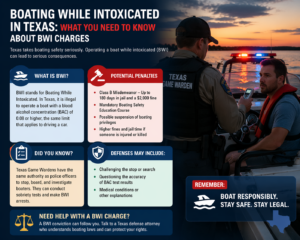
Boating While Intoxicated in Texas: What You Need to Know About BWI Charges
Texas has more than 800,000 registered recreational watercraft and some of the most active boating [...]
Before You Launch: BWI Enforcement on North and Central Texas Lakes
Texas has more than 560,000 registered boats and an estimated 359,000 additional unregistered watercraft operating [...]
Can You Get Life in Prison for a DWI in Texas? The Peace Officer Enhancement Explained
A Tarrant County jury recently sentenced DeAujalae Evans, 26, to life in prison after she [...]
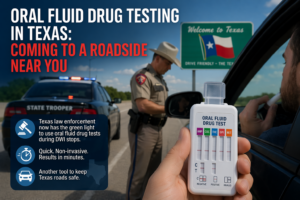
Oral Fluid Drug Testing in Texas: Coming to a Roadside Near You
Oral fluid drug testing (collecting saliva and testing it for the presence of drugs) is [...]
How Texas Uses Out-of-State DWI Convictions for Enhancement and How the Defense Challenges Them
Texas Penal Code §49.09 contains two facts that surprise most people who come to us [...]
The Deadly Weapon Finding — Not Automatic
A common misunderstanding is that every Intoxication Assault case automatically produces a deadly weapon finding on the vehicle. Texas case law is clearer and more defense-friendly than that. The deadly weapon finding is contestable, requires specific evidence, and is subject to a developed body of appellate law that rejects deadly weapon findings in cases that fall short of the statutory test.
The Statutory Framework — Texas Penal Code §1.07(a)(17)
Penal Code §1.07(a)(17) defines a deadly weapon as (A) a firearm or anything manifestly designed, made, or adapted for the purpose of inflicting death or serious bodily injury, or (B) anything that in the manner of its use or intended use is capable of causing death or serious bodily injury. A vehicle is not a deadly weapon per se. It becomes a deadly weapon only if used in a manner capable of causing death or serious bodily injury.
The Sierra Two-Part Analysis
Under Sierra v. State, 280 S.W.3d 250 (Tex. Crim. App. 2009), the court reviewing a deadly weapon finding in a DWI-family case considers two questions:
- The manner in which the defendant used the motor vehicle during the felony; and
- Whether, during the felony, the motor vehicle was capable of causing death or serious bodily injury.
The Foley Five Factors
Under Foley v. State, 327 S.W.3d 907 (Tex. App.—Corpus Christi 2010, pet. ref’d), the manner-of-use analysis considers five factors:
- Intoxication;
- Speeding;
- Disregarding traffic signs and signals;
- Driving erratically; and
- Failure to control the vehicle.
Cases Rejecting Deadly Weapon Findings
Several important appellate decisions have rejected deadly weapon findings in DWI-family cases, establishing that the finding is not automatic:
- Couthren v. State, 571 S.W.3d 786 (Tex. Crim. App. 2019) — a deadly weapon finding in a DWI case is dependent upon specific testimony in the record about the manner of use. There must be evidence that the manner of driving is capable of causing death or serious bodily injury apart from the fact of collision and the defendant’s intoxication. Intoxication plus collision, without more, does not support the finding.
- Pointe v. State, 371 S.W.3d 527 (Tex. App.—Beaumont 2012) — no deadly weapon finding where the other driver pulled out in front of the defendant and caused the accident, even though the defendant was intoxicated. Intoxication alone is not enough — reckless or dangerous manner of use is required.
- Williams v. State, 946 S.W.2d 432 (Tex. App.—Fort Worth 1997) — a deadly weapon finding requires evidence that, when the DWI occurred, someone was actually present and actually placed in danger of serious bodily injury or death. Hypothetical danger is insufficient.
Consequences of a Deadly Weapon Finding
- 50 percent parole eligibility. Parole eligibility is calculated at one-half of the calendar time served, rather than the standard one-fourth. A 10-year sentence means 5 years of actual time before eligibility, not 2.5 years.
- No good conduct credit toward parole eligibility. Good conduct time continues to accrue for other purposes, but does not accelerate parole eligibility on a deadly weapon finding.
- No mandatory supervision. The automatic release-to-supervision framework for non-violent offenses does not apply.
- No community supervision from the court. Under CCP Art. 42A.054, where an affirmative deadly weapon finding is entered, the judge cannot grant community supervision. Only a jury can grant probation in such cases.
Whether a deadly weapon finding attaches is itself negotiable in some cases. Where the State’s evidence falls short of the Sierra/Foley framework, the finding can be defeated at trial or avoided by plea. The difference changes the actual-time-served calculation by years.
The Full DWI Forensic Framework Still Applies
Because §49.07 requires the State to prove intoxication, the entire DWI forensic framework applies to the defense. Every challenge available in a standard DWI case is available in an Intoxication Assault case and the stakes are dramatically higher.
Blood Test Challenges — GC-FID at DPS Garland
Blood alcohol analysis in Texas is performed by headspace gas chromatography with flame ionization detection (GC-FID). Cases from Denton County are often analyzed at the DPS Crime Lab in Garland. Every step of the analysis is contestable:
- Chain of custody — from blood draw through laboratory receipt through storage through analysis.
- Preservative balance — sodium fluoride (to prevent fermentation) and potassium oxalate or EDTA (to prevent clotting) in correct amounts.
- Instrument calibration — quality control standards, reference standards, and run-to-run calibration.
- Operator certification and protocol adherence.
- Uncertainty of measurement — GC-FID analysis has known analytical uncertainty that can be material at any BAC tier.
Retrograde Extrapolation
A blood test taken hours after an accident does not measure BAC at the time of driving. Retrograde extrapolation (the calculation that estimates BAC at an earlier time from a later measurement) involves assumptions about absorption phase, elimination rate, and time-to-peak that are often not met in Intoxication Assault cases. A driver still in the absorption phase at the time of driving may have had a lower BAC then than at the time of testing. Texas is a “time of driving” state. Intoxication at the time of testing is not the question.
Breath Test Challenges
Where breath testing was performed, the 15-minute observation period, operator certification, instrument calibration, and interfering-substance analysis all apply. Residual mouth alcohol from recent drinking, GERD, dental work, and diabetic ketoacidosis can all affect breath readings.
SFST Administration
Accident-scene field sobriety testing is distorted by the physiological effects of the accident itself such as adrenaline response, injuries, medical shock, and environmental factors (roadway slope, lighting, weather, passing traffic). As a trained SFST instructor, Deandra Grant addresses SFST reliability in every case.
Hospital Blood — ETOH in Medical Records
A distinctive feature of Intoxication Assault cases: even where no police-collected blood sample exists (or in addition to one) the State may subpoena the defendant’s medical records from the treating hospital and use ETOH (ethanol) readings from clinical blood draws at trial. Clinical blood tests are performed for medical purposes, not forensic purposes, and they differ from DPS-lab forensic blood tests in important ways.
- Serum versus whole blood. Clinical laboratories typically test serum (the liquid portion after separation from red blood cells), whereas forensic laboratories test whole blood. Serum ethanol readings are typically higher than whole-blood readings (commonly 12-20 percent higher) because ethanol distributes preferentially in the aqueous phase.
- Clinical methodology. Hospital laboratories use enzymatic assay methods (ADH-based) rather than the GC-FID methodology used in forensic laboratories. Enzymatic assays are subject to different interferences and uncertainty profiles.
- Chain of custody. Medical blood draws are collected and handled for medical purposes, not forensic evidentiary purposes. Chain of custody, labeling, and storage practices differ from forensic standards.
- Timing and interpretation. Hospital blood is often drawn hours after the accident, raising the same retrograde-extrapolation issues that apply to forensic blood plus additional interpretive issues tied to IV fluids, surgery, blood transfusions, and trauma-related physiological changes.
Where the State relies on hospital blood, the methodology, timing, and interpretation are all contestable. These are distinct challenges from those that apply to DPS-lab forensic blood, and they require specific forensic analysis.
Article 38.23 — No Good Faith Exception
Every Intoxication Assault case begins with the lawfulness of the stop, search, seizure, and blood draw. CCP Article 38.23 is Texas’s exclusionary rule, and it is more protective than its federal counterpart: Texas carries no good faith exception. Evidence obtained in violation of the law is suppressible regardless of what it shows.
Suppression issues frequently central to Intoxication Assault cases:
- Reasonable suspicion and probable cause for the stop (where the driver was not immediately at the accident scene).
- Probable cause for arrest — articulable facts linking the driver to intoxication versus accident-shock symptoms.
- Blood warrant validity — affidavit specificity, probable cause, timing, and scope.
- Implied consent under Transportation Code Chapter 724 and the statutory vs. warrant-based blood draw distinction.
- Custodial statements — CCP Article 38.22 compliance on Miranda warnings, voluntariness of any waiver, and electronic recording of statements.
Probation — CCP Art. 42A.401 Mandatory Jail
Where community supervision (probation) is granted on an Intoxication Assault case (by a jury, or where no deadly weapon finding has been entered) CCP Article 42A.401 imposes a statutory minimum jail term as a condition of probation: 30 days in county jail for Intoxication Assault. This is a mandatory floor, not a discretionary condition. Courts have no authority to waive it.
This changes the plea-stage calculus in important ways. A defendant choosing between probation and a prison sentence must understand that probation is not a jail-free outcome on an Intoxication Assault. A minimum 30-day jail term is part of any probation disposition, on top of ordinary probation conditions, fines, community service, substance abuse treatment, and ignition interlock.
Civil Liability and 11 U.S.C. §523(a)(9) Non-Dischargeability
The consequences of Intoxication Assault extend beyond the criminal case. Parallel civil exposure typically includes:
- Compensatory damages under Texas Civil Practice and Remedies Code Chapter 41 — medical expenses, property damage, lost wages, pain and suffering.
- Exemplary (punitive) damages under CPRC §41.003 for gross negligence. Intoxicated driving that causes serious injury is often treated as gross negligence per se for exemplary-damages purposes.
- Auto insurance policy exclusions for DWI-related accidents, which can leave the defendant personally liable for uninsured damages.
- Civil judgment non-dischargeability in bankruptcy — 11 U.S.C. §523(a)(9) provides that a judgment for death or personal injury caused by the operation of a motor vehicle while intoxicated cannot be discharged in bankruptcy. The civil judgment follows the defendant indefinitely.
Civil and criminal exposure are analyzed together. Statements made in the criminal case can become evidence in the civil case; depositions in the civil case can create impeachment in the criminal case; and the strategic choices on one side affect the other.
ALR and License Consequences
The Administrative License Revocation process applies alongside the criminal case:
- Failed test: 90-day ALR suspension on a first failed test.
- Refusal: 180-day ALR suspension on a first refusal (2 years on a repeat).
- ALR deadline: 15 days from the date of notice of suspension.
- Criminal-court license suspension on §49.07 conviction: 180 days to 2 years, with potentially longer exposure tied to the felony conviction itself.
- Transportation Code §709.001 civil statutory fine: $3,000 first offense; $6,000 if BAC is 0.15+. This is on top of the criminal fine.
Defense Strategies in Lewisville Intoxication Assault Cases
SBI definition challenges. Whether the injury meets the §1.07(46) threshold is a medical and legal question. Severity alone does not make an injury SBI. The statutory categories must be met. Medical records, treating physician testimony, and prognosis evidence all bear on whether the SBI element is met.
- 6.04 but-for causation challenges. The State must prove more than intoxication plus an accident. Where a concurrent cause (mechanical failure, third-party conduct, road hazard, complainant fault) was clearly sufficient and the defendant’s conduct clearly insufficient, the §6.04 exception defeats causation. Independent accident reconstruction and black-box data analysis are central to this defense.
Deadly weapon finding challenges. The deadly weapon finding is not automatic. Where the State cannot produce specific evidence of reckless or dangerous manner of use apart from the collision and the intoxication, the finding can be defeated. Years of exposure turn on this issue.
Enhancement challenges. §49.09(b-1) and (b-4) enhancements require specific factual predicates (victim status in actual discharge of official duty, or TBI specifically resulting in persistent vegetative state). The difference between third-degree and first-degree exposure turns on these facts, which are contestable.
Forensic challenges on intoxication. Blood test methodology, retrograde extrapolation, breath test reliability, and SFST administration all apply. As an ACS-CHAL Forensic Lawyer-Scientist, with a Master of Science in Pharmaceutical Science and a Graduate Certificate in Forensic Toxicology, Deandra Grant reads the underlying laboratory data, not just the summary report. Hospital blood (clinical ETOH readings from medical records) is separately contestable from DPS-lab forensic blood.
Article 38.23 — no good faith exception. Stops, searches, blood warrants, and custodial statements are all subject to suppression analysis. Evidence from an unlawful investigation is suppressible regardless of what it shows. Texas’ more protective exclusionary rule is central to the defense of every §49.07 case.
Coordination with civil defense. Civil and criminal exposure run on parallel tracks. Coordinated strategy (addressing the §523(a)(9) non-dischargeability, insurance issues, and parallel civil discovery) protects the client’s long-term position across both cases.
Digital evidence review. Modern accident investigations rely on vehicle event data recorders (“black boxes”), cell phone records, traffic camera footage, and commercial surveillance systems. Independent analysis (not reliance on the police department’s interpretation) is essential. Partner Douglas Huff’s digital forensics training applies directly to this evidence stream.
Punishment mitigation from day one. Where conviction appears likely, punishment mitigation begins at the first client meeting and not just at the sentencing hearing. Baseline substance-abuse evaluation, voluntary SCRAM monitoring to document sobriety, character witness development, and documented remorse (contemporaneous rather than post-conviction) all contribute to the mitigation record.
Why Deandra Grant Law for Lewisville Intoxication Assault Defense
-
- Office in Denton. 30+ years in Denton County courts. 500+ trials to verdict. The Denton County Courthouse and the Denton County DA’s office are familiar ground.
- ACS-CHAL Forensic Lawyer-Scientist — Deandra Grant. Blood alcohol analysis, GC-FID methodology, and retrograde extrapolation evaluated at the chromatography level.
- Master of Science in Pharmaceutical Science + Graduate Certificate in Forensic Toxicology. Pharmacology of impairment, hospital-blood vs forensic-blood methodology, and interpretation of laboratory data.
- Trained SFST Instructor — Deandra Grant. Field sobriety test administration, scoring, and interpretation challenged in every case.
- ACS-CHAL Forensic Lawyer-Scientist — Douglas Huff. Second forensic-credentialed attorney at the firm. Digital forensics training applicable to accident reconstruction and black-box evidence.
- Deadly weapon finding defense.
- Article 38.23 — no good faith exception. Every §49.07 case begins with the lawfulness of the stop, search, blood warrant, or seizure.
- Civil-criminal coordination. Parallel civil and criminal exposure managed as an integrated defense, including §523(a)(9) non-dischargeability analysis.
- Federal defense capability. James Lee Bright handles federal cases in the Eastern District of Texas (Sherman Division) — the federal district for Denton County.
- 17 published law books. Including The Texas DWI Manual
- Texas Super Lawyer since 2011.
- AV® Preeminent rated by Martindale-Hubbell®.
If you are facing Intoxication Assault charges in Denton County, call (214) 225-7117 for a free, confidential consultation. Or schedule online at texasdwisite.com.
Client Reviews

“Deandra Grant Law – Criminal & DWI Defense handled my case with diligence and professionalism. Deandra Grant’s reputation is stellar and now I know why. She has a team of individuals who provide quality service.”