
Imagine feeling drunk without drinking a drop of alcohol. Imagine failing a breathalyzer test after eating a plate of pasta. For people living with auto-brewery syndrome (ABS), this is not a hypothetical. It is daily life. Also known as gut fermentation syndrome, ABS is a condition in which microbes in the gastrointestinal tract ferment ordinary dietary carbohydrates into significant amounts of ethanol. The result is endogenous (internally produced) intoxication that the affected person neither sought nor expected.
For decades, ABS was dismissed as a medical curiosity or, worse, as an excuse invented by people caught driving under the influence. But a growing body of peer-reviewed research, capped by a landmark study published in Nature Microbiology in January 2026, has changed the conversation entirely. We now have scientific proof of the specific bacteria, yeast, and metabolic pathways that enable the human gut to act as an internal brewery.
| KEY TAKEAWAYS
✓ Auto-brewery syndrome (ABS) is a real, medically documented condition where gut microbes ferment carbohydrates into ethanol inside the body. ✓ A landmark 2026 study in Nature Microbiology identified specific bacteria and metabolic pathways responsible for endogenous alcohol production. ✓ Antibiotic overuse, high-carb diets, acid-blocking medications, and COVID-19 infection are among the environmental factors driving increased prevalence. ✓ ABS sits on a continuum—some individuals produce massive amounts of alcohol, while others experience subtle cognitive and behavioral effects at lower levels. ✓ Fecal microbiota transplantation (FMT) is emerging as a promising treatment option for treatment-resistant cases. |
A Brief History: From Japan to the Courtroom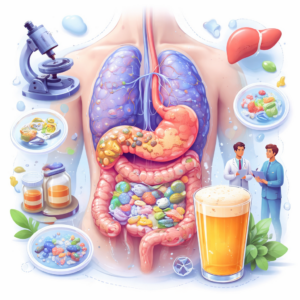
The first well-documented case of auto-brewery syndrome involved Kozo Ohishi, a 46-year-old Japanese man whose case was studied in 1959 by researchers at Hokkaido University. They confirmed that Ohishi manufactured significant amounts of ethanol after eating carbohydrate-rich test meals, and the ethanol production was linked to an overgrowth of Candida albicans, a common yeast. Over the next two decades, about two dozen additional cases were reported in Japan, and a lab-confirmed case was reported in the United States in the 1970s.
The condition first entered American legal history in December 1990, when Albuquerque defense attorney Ray Twohig argued that his client’s DUI charges should be dismissed as a case of involuntary intoxication caused by gut yeast overgrowth. Two medical experts supported the claim, but the prosecutor called it “boloney” and the judge rejected it. A similar Wisconsin defense was rejected in 1993.
Those early setbacks reflected the limited scientific understanding of the era. Today, the science has caught up, and courtroom outcomes have begun to change. Since 2015, at least four DUI cases in the United States have been dismissed based on controlled clinical testing that confirmed endogenous ethanol production. In April 2024, a Belgian court dismissed DUI charges against a man with lab-confirmed ABS—a case that made international headlines.
What Causes Auto-Brewery Syndrome?
Auto-brewery syndrome occurs when certain microorganisms in the gastrointestinal tract convert dietary sugars and starches into ethanol. Historically, the condition was associated primarily with Candida albicans and other yeasts. However, advances in microbiome science have dramatically expanded our understanding. We now know that at least 85 different microbes are capable of producing alcohol in humans.
The Usual Suspects: Yeast and Bacteria
The organisms most commonly associated with ABS include yeasts such as Candida albicans, Candida krusei, Candida glabrata, and Saccharomyces cerevisiae (brewer’s yeast). But the expanding list also includes the bacterium Klebsiella pneumoniae, which is resistant to commonly prescribed antibiotics like amoxicillin and ampicillin. K. pneumoniae is particularly efficient at converting dietary sugars to ethanol and has been identified in multiple ABS case studies.
The Role of Antibiotics
Cases of ABS are frequently linked to a history of high-dose or prolonged antibiotic use. Antibiotics can wipe out the protective bacteria in the gut, creating an opportunity for ethanol-producing yeast and bacteria to proliferate unchecked. The scale of antibiotic overuse is staggering: the CDC reported in 2022 that medical clinicians in the United States prescribed over 236 million antibiotic prescriptions, with about one out of three being unnecessary. A course of amoxicillin alone increases the odds of Candida overgrowth by eight-fold.
Other Contributing Factors
Several additional environmental and medical factors have been identified as contributing to ABS or creating the conditions for its onset:
- Heavy consumption of carbohydrate-rich and ultra-processed foods
- Proton pump inhibitors (PPIs) and other acid-blocking medications, which can disrupt the gut microbiota and promote yeast overgrowth
- Compromised immune function
- Diabetes and other metabolic conditions
- Crohn’s disease, short bowel syndrome, or other gastrointestinal disorders
- COVID-19 infection, which emerging research shows can significantly disrupt the gut microbiome and has been linked to at least one confirmed ABS case
The 2026 Breakthrough: Gut Microbes Caught in the Act
In January 2026, a research team from UC San Diego, Mass General Brigham, and collaborating institutions published what is now the largest and most detailed study of ABS to date in Nature Microbiology. The study evaluated 22 patients with confirmed ABS alongside 21 household partners and 22 healthy control participants.
The findings were groundbreaking on several fronts:
- Specific bacteria identified: Gut microbiome analysis revealed an enrichment of Proteobacteria in ABS patients, including Escherichia coli and Klebsiella pneumoniae, confirming what earlier case reports had suggested.
- Ethanol production pathways mapped: Researchers identified specific gene clusters enriched in ABS patients, including the mixed-acid fermentation pathway, heterolactic fermentation pathway, and ethanolamine utilization pathway—providing a molecular blueprint for how the gut manufactures alcohol.
- Stool-based evidence: Stool samples collected during active ABS flare-ups produced significantly more ethanol than samples from household partners or healthy controls, opening the door to a potential stool-based diagnostic test.
- Fecal microbiota transplantation (FMT) as treatment: The team documented a patient whose symptoms improved dramatically after FMT when other treatments had failed. After a second transplant with a different antibiotic pretreatment protocol, the patient remained symptom-free for more than 16 months.
This study represents a paradigm shift. For the first time, researchers have connected the dots between specific microbes, their metabolic machinery, and the clinical reality of endogenous intoxication in a large, controlled cohort.
Is Auto-Brewery More Common Than We Think?
For years, ABS was considered vanishingly rare. But the evidence increasingly suggests otherwise. While fewer than a hundred cases have been formally documented in the medical literature, this likely reflects widespread underdiagnosis rather than true rarity.
There are compelling reasons to believe the prerequisites for ABS have become far more common over the past several decades. The American diet has shifted heavily toward hyper-palatable, ultra-processed foods rich in simple carbohydrates and sugar which is the exact fuel that ethanol-producing microbes thrive on. Acid-blocking medications have become a multi-billion-dollar industry. Antibiotic use remains widespread, both in prescriptions and as subclinical exposures through the food supply. And COVID-19, which by the end of 2023 had infected an estimated 87% of Americans at least once, is known to disrupt the gut microbiome.
Researchers have described this convergence of environmental factors as “dysbiotic drift”, i.e. a gradual, population-level shift in the gut microbiome driven by modern dietary habits, medication use, and environmental exposures. The rates of conditions associated with gut dysbiosis, including inflammatory bowel disease and metabolic dysfunction-associated steatotic liver disease (MASLD), have doubled since the 1970s.
ABS Sits on a Continuum
One of the most important concepts for understanding ABS is that it exists on a spectrum. The condition is not defined by a particular blood alcohol threshold. Some individuals produce massive quantities of ethanol after a test meal or glucose load. Blood alcohol concentrations of 0.30% to 0.40% have been documented. Others produce more modest amounts that may sit below the legal limit of 0.08% but still affect cognition, behavior, and impulse control.
Research demonstrates that even small elevations in blood alcohol, as low as 0.02%, can increase risk-taking, reduce inhibitory control, and contribute to impulsive decision-making. For someone unknowingly producing endogenous alcohol, these subtle cognitive shifts could lead to involvement with the justice system without anyone, including the affected individual, realizing that a medical condition was a factor.
Symptoms: More Than Just Feeling Drunk
People with ABS can experience a wide range of symptoms beyond the sensation of intoxication. These include:
- Chronic fatigue and brain fog (a generalized slowing of cognitive processing, communication difficulties, and memory problems)
- Mood swings, irritability, and depression
- Dizziness, disorientation, and impaired coordination
- Gastrointestinal distress, including bloating, nausea, and belching
- Hangovers without having consumed alcohol
- In some cases, aggressive or impulsive behavior
Brain fog is among the most commonly reported complaints. Recently, validated scales to measure brain fog have been developed, and researchers have suggested that brain fog assessments should be included as part of a neuropsychological evaluation for patients suspected of having ABS.
Diagnosis and Treatment
Diagnosing ABS remains challenging and requires a clinician who is familiar with the condition. The standard diagnostic protocol includes:
- Clinical suspicion based on symptoms and history
- A complete medical history and physical examination
- A controlled carbohydrate challenge test: the patient consumes a high-carbohydrate meal or glucose solution in a monitored setting, with blood alcohol levels measured periodically over several hours
- Stool cultures and testing for ethanol-producing yeast and bacteria
- Upper and lower endoscopy for bacterial and fungal testing when indicated
Current treatment approaches include:
- Antifungal medications such as fluconazole
- A strict low-carbohydrate, low-sugar diet
- Probiotics to help restore healthy gut flora
- Avoidance of unnecessary antibiotics
- Fecal microbiota transplantation (FMT) for treatment-resistant cases, based on the promising results of the 2026 Nature Microbiology study
It is important to note that only doctors familiar with ABS should be consulted. The condition can occur in otherwise healthy individuals, and many healthcare providers have never encountered it.
Why This Matters: Beyond the Science
ABS is not just a medical curiosity. It has real consequences for the people who live with it. Patients report lost jobs, damaged relationships, wrongful DWI arrests, and the emotional toll of being disbelieved by family, friends, and even their own doctors. Children and adolescents can be affected too—case studies have documented ABS in patients as young as 13.
In the legal system, ABS raises profound questions about involuntary intoxication and criminal responsibility. A person who unknowingly produces alcohol in their gut did not choose to become intoxicated. As awareness grows and diagnostic tools improve, it is critical that the legal and medical communities work together to ensure that people with ABS are treated with the understanding and fairness they deserve.
Looking Ahead
The science of auto-brewery syndrome is advancing rapidly. The 2026 Nature Microbiology study has opened new doors for stool-based diagnostics, targeted treatments, and a deeper understanding of how the gut microbiome influences human health in ways we are only beginning to appreciate. A clinical trial evaluating FMT in eight ABS patients is already underway at UC San Diego and Mass General Brigham.
If you or someone you know is experiencing unexplained intoxication, brain fog, or other symptoms consistent with ABS, know that you are not alone—and that the science is finally catching up to what patients have been saying for years: this condition is real.
| LEARN MORE & GET SUPPORT
Visit www.AutoBrewery.info for resources, research updates, and support community information. Read My Gut Makes Alcohol by Barbara Cordell for an in-depth exploration of ABS, patient stories, and the latest science. Join the Auto-Brewery Support Group on Facebook to connect with others who understand what you’re going through. Contact Dr. Barbara Cordell: BarbaraCordell@autobrewery.org | 936-554-7678 |
References & Further Reading
- Hohmann, E. et al. “Gut microbial ethanol metabolism contributes to auto-brewery syndrome in an observational cohort.” Nature Microbiology (2026).
- Logan, A.C. et al. “Beyond Auto-Brewery: Why Dysbiosis and the Legalome Matter to Forensic and Legal Psychology.” 13(4) Laws (2024).
- Logan, A.C., Cordell, B. & Oberman, S. “Bacillus Criminalis: Why Defense Attorneys Should Consider Auto-Brewery Syndrome.” The Champion, Jan/Feb 2026.
- Oberman, S. & Cordell, B. “Auto-Brewery Syndrome.” Chapter 8, §8:14, Drunk Driving Defense, 9th Ed.
- Cordell, B. & Kanodia, A. “Auto-Brewery as an Emerging Syndrome: Three Representative Case Studies.” J Clin Med Case Reports 2(2): 5 (2015).
- Cordell, B. et al. “Case-Control Research Study of Auto-Brewery Syndrome.” Global Advances in Health and Medicine (2019).
- Meijnikman, A.S. et al. “Endogenous Ethanol Production in Health and Disease.” Nature Reviews Gastroenterology & Hepatology (2024).
- Xue, G. et al. “Three Klebsiella Species as Potential Pathobionts Generating Endogenous Ethanol in a Clinical Cohort of Patients with Auto-Brewery Syndrome.” 91 EBioMedicine (2023).
- Stamation, E. et al. “Endogenous Ethanol Production in the Human Alimentary Tract: A Literature Review.” Journal of Gastroenterology and Hepatology (2025).
- Mbaye, B. et al. “Repertoire of Ethanol-Producing Human Microbes.” Research Square (2023).
- “Outpatient Antibiotic Prescribing in the United States.” (2022).
- Cordell, B. My Gut Makes Alcohol. Published work on auto-brewery syndrome advocacy and education.