Video evidence has transformed criminal prosecution. Body-worn cameras on police officers, surveillance cameras on businesses and homes, dash cameras in patrol cars, Ring doorbells, and security DVR systems capture millions of hours of footage. When prosecutors present video evidence, jurors tend to accept it as objective proof. “The camera doesn’t lie.”
Except that it can. Video evidence is subject to technical limitations, manipulation, quality issues, and interpretation problems that can make it far less reliable than it appears.
Types of Video Evidence in Criminal Cases
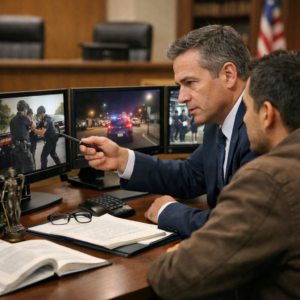
- Police body cameras — worn by officers during encounters, arrests, searches, and statements
- Dash cameras — mounted in patrol vehicles, recording traffic stops, pursuits, and roadside encounters
- CCTV and DVR systems — business and home surveillance systems that record continuously or on motion detection
- Ring and doorbell cameras — consumer devices that capture activity at entry points
- Mobile phone video — recorded by witnesses, bystanders, or the parties involved
- Concealed cameras — hidden recording devices used in investigations or private settings
Why Video Evidence Is Not Always What It Seems
Camera Perspective Is Not Reality
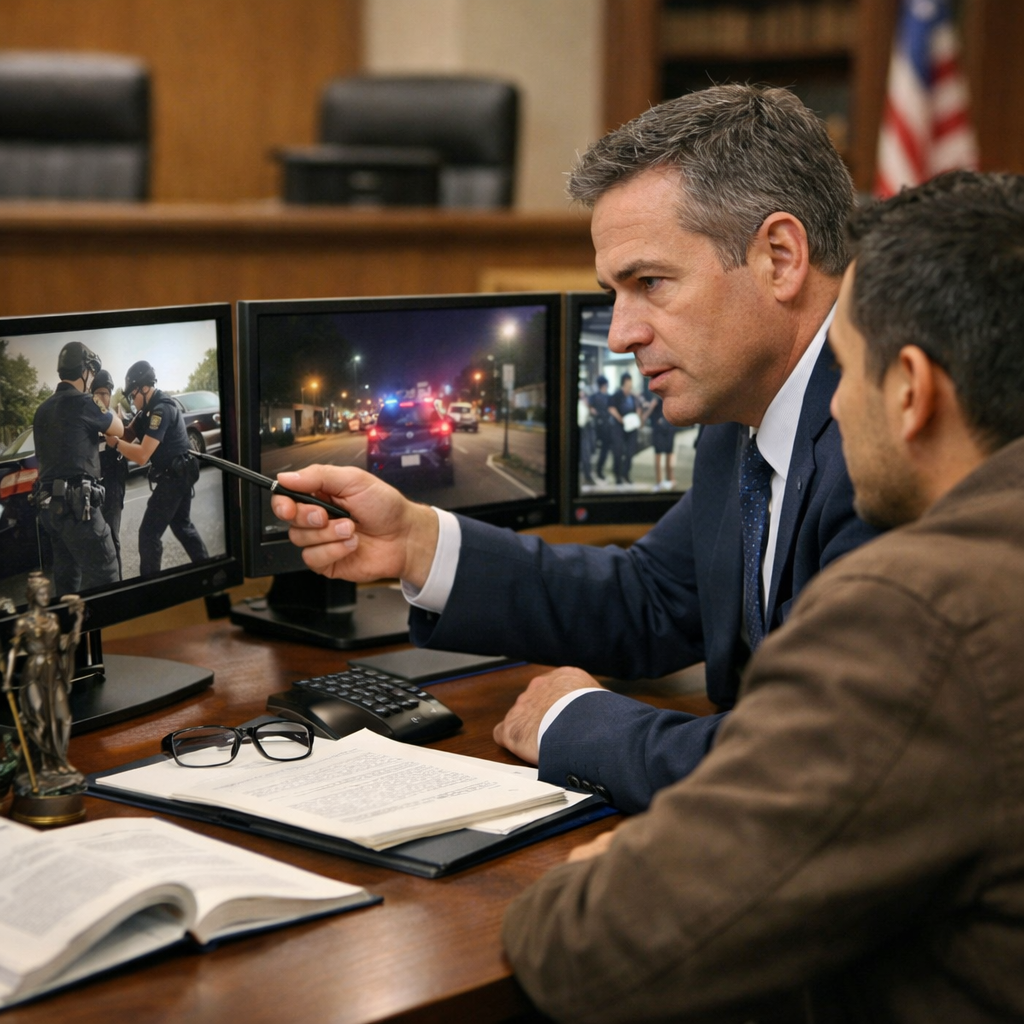
A camera captures a single perspective from a fixed point. It does not see what was happening outside its field of view. It may distort distances, angles, and spatial relationships. An encounter that looks aggressive from one camera angle may look very different from another angle or from the perspective of the participants. Body cameras, in particular, capture a narrow field of view that does not represent what the officer actually saw.
Quality and Resolution Limitations
Many surveillance systems record at low resolution, in poor lighting conditions, and with limited frame rates. The resulting footage may be grainy, blurry, or too dark to identify individuals or actions with certainty. Prosecutors may present enhanced versions of this footage, but the enhancement process itself introduces questions about whether the enhanced image accurately represents reality.
Timestamp Accuracy
DVR systems and surveillance cameras are only as accurate as their internal clocks. If the system’s clock is not synchronized with actual time, the timestamps on the footage may be incorrect — potentially by minutes or hours. This can be critical when the timing of events is at issue.
Missing Footage
Body cameras have activation delays, are sometimes not activated at all, and may have gaps in recording. Surveillance DVRs overwrite footage after a set period. If critical footage is missing, the question becomes: was it lost through normal system operation, or was there a failure to preserve evidence?
Video Authentication
Before video evidence is admitted, it must be authenticated. Video forensics experts use scientific methods to determine whether video has been altered:
-
- Recompression analysis — determining whether video has been re-encoded, which can indicate editing
- Pixel analysis and clone detection — identifying duplicated or altered regions within frames
- Audio waveform analysis — examining the audio track for edits, splices, or overdubs
- Source device identification — determining what device recorded the video and whether the file is consistent with that device’s native format
- Noise analysis — examining the video’s noise pattern for inconsistencies that indicate manipulation
DVR Extraction and Recovery
There are over 5,000 DVR manufacturers, each using different file formats, compression methods, and storage systems. Extracting video from these systems in a forensically sound manner requires specialized tools and expertise. Doug knows what questions to ask about how the prosecution obtained and preserved its video evidence.
Talk to a Defense Team That Understands Digital Evidence
At Deandra Grant Law, Attorney Douglas Huff is our Partner and Criminal Division Chief — a senior trial attorney who has completed advanced training in digital forensics with Garrett Discovery, one of the nation’s leading digital forensics firms. Doug doesn’t just read the prosecution’s forensic reports. He has the training to understand the tools, challenge the methods, and expose the weaknesses in digital evidence.
If you are facing criminal charges involving digital evidence of any kind, contact Deandra Grant Law for a free, confidential consultation.
Call (214) 225-7117 or schedule an appointment online at texasdwisite.com.