
When the Video Might Be a Lie: How Texas Defense Lawyers Are Fighting Deepfake-Era Evidence
For decades, a grainy surveillance clip or a damning social-media video was close to game-over for the defense. Juries tend to believe what they can see and hear. But artificial intelligence has changed the math. Today, a convincing fake voicemail can be produced in minutes. A face can be swapped into a bar fight. A license plate can be edited out of a parking-lot video. The tools that do this are no longer confined to research labs. They are free, fast, and everywhere.
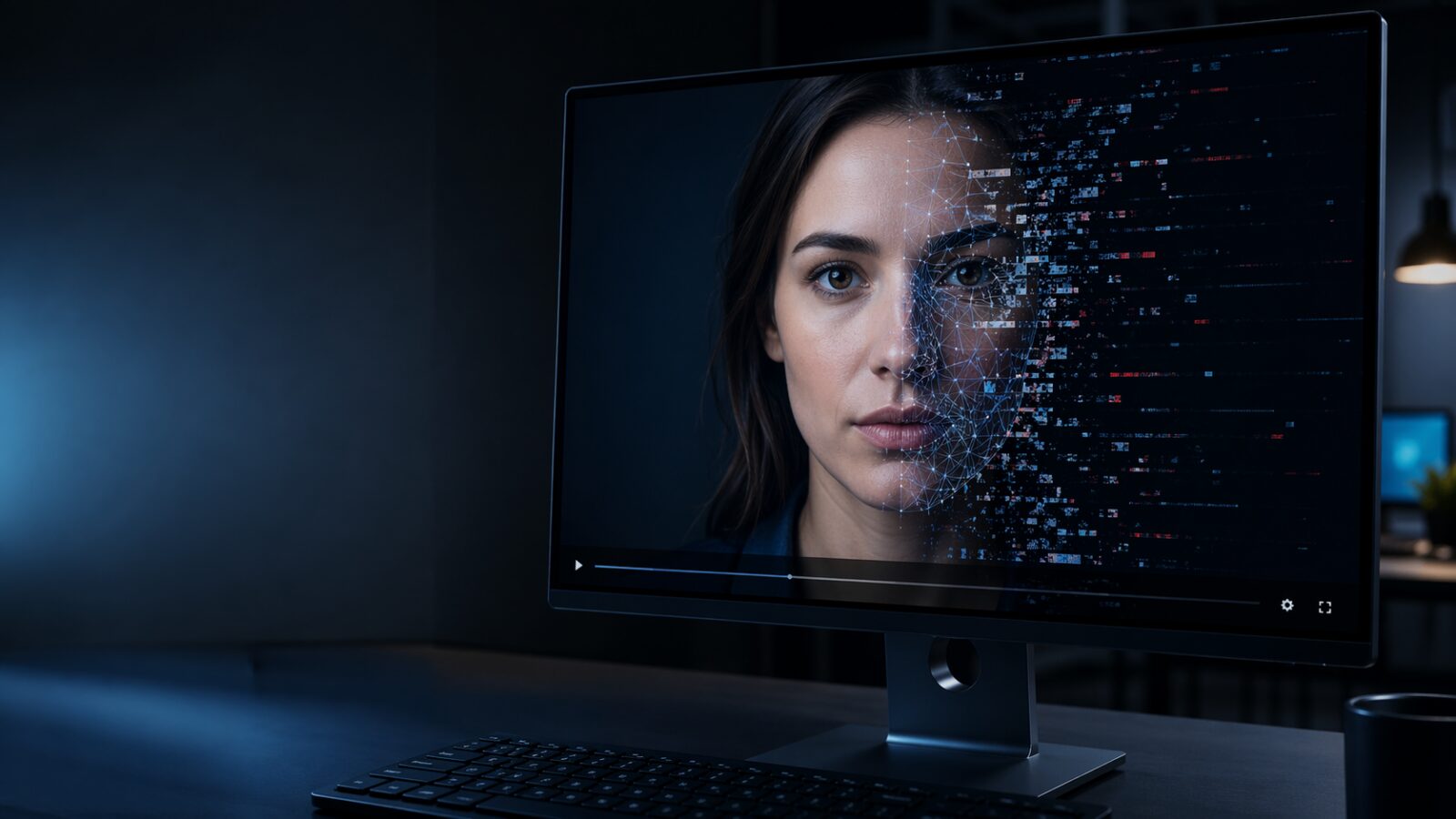
That reality is finally reaching the courts. In February 2026, New York’s highest court threw out a child-protective finding because the video at the center of the case had not been properly authenticated in the age of deepfakes. Around the same time, a federal advisory committee closed public comment on a proposed new Federal Rule of Evidence 707 which is a rule designed to put AI-generated evidence through the same gatekeeping that already applies to expert testimony. Defense lawyers who have been quietly warning about this for years now have a landmark ruling to point to. The parallel federal rule stalled in mid-2026, as explained below, but the New York decision is real and is already being cited.
If you are facing criminal charges in Texas and the State is relying on digital video, an audio recording, social-media posts, or a voicemail, the authentication fight is no longer a technicality. It may be the case.
The New York Ruling That Shook Loose the Conversation
The case is Matter of M.S. (M.H.), decided February 17, 2026, by the New York Court of Appeals. It began in Erie County Family Court, where a mother was found to have failed to protect her children from sexual abuse by her boyfriend. The only meaningful evidence of abuse consisted of three video clips recovered by the FBI from the computer of a Syracuse man (identified in the opinion by initials) who was being investigated for possessing child sexual abuse material. The man told authorities he had hacked into a home security camera across the state and captured the abuse on video.
The family court admitted the videos. The intermediate appellate court affirmed. The Court of Appeals reversed, over two dissents, in a majority opinion by Chief Judge Rowan Wilson. The court held that the videos were not properly authenticated and that, without them, the case fell apart. The FBI agent who recovered the clips had been asked only whether he had observed any signs of tampering and had answered, simply, “no.” He was never asked about his training in detecting manipulation, about any forensic tools used to analyze the files, or about any affirmative opinion that the videos were genuine. The majority said that was not enough. The court rested its decision on a second, independent ground as well: a significant portion of the FBI agent’s authentication testimony was itself inadmissible hearsay.
Two judges filed sharp dissents. Judge Madeline Singas accused the majority of a “superficial and simplistic analysis of deepfake technology” and warned that the decision effectively creates a presumption of forgery that defense attorneys in every kind of case will now exploit. Judge Shirley Troutman wrote that the majority was creating “new and perhaps insurmountable hurdles” for future authentication.
The dissenters may be right about one thing: defense lawyers across the country are paying close attention. Law360 called the ruling a “clarion call” for verification in the age of deepfakes. Digital-forensics publications have described it as the first real appellate recognition that the old rules about video authentication were written for a world that no longer exists.
What the Proposed Federal Rule 707 Would Do
At the federal level, the U.S. Judicial Conference’s Advisory Committee on Evidence Rules has been working for more than a year on how the Federal Rules of Evidence should adapt. The result is a proposed new Rule 707, titled “Machine-Generated Evidence.” Public comment on the rule closed February 16, 2026, and the Advisory Committee took it back up on May 7, 2026. It declined to advance the rule in its current form, citing broader concerns, and in June 2026 the Judicial Conference’s Standing Committee agreed, sending Rule 707 back for revision and further study rather than forward for adoption. As of this writing there is no Rule 707 and no effective date, and the once-cited December 2027 timeline is no longer on track.
The proposed rule is short but important. In plain English: if a party wants to introduce evidence generated by a machine (including AI output) without an expert witness who can testify about it, the court must treat the evidence as if a human expert were testifying. That means the proponent has to show the evidence is based on sufficient facts or data, was produced by reliable principles and methods, and reliably applies those methods to the facts. In other words, AI-generated evidence would face the same Daubert-style reliability hearing that human expert testimony already faces under Federal Rule of Evidence 702.
Rule 707, if eventually passed in some form, is not binding on Texas state courts. But once a federal evidence rule is adopted, Texas courts routinely look to it for guidance when interpreting analogous state rules and the Texas Rules of Evidence are closely patterned on the federal rules. If a version of it is eventually adopted, that guidance role is why Texas defenders should track it. For now, though, the more telling development is the pause itself: the rulemakers looked at machine-generated evidence, decided the problem was harder than a single rule, and split the deepfake question onto its own track, a separate proposal known as Rule 901(c).
Texas Rules 901 and 902: The Authentication Framework in Play
Every piece of evidence offered in a Texas criminal trial has to clear the authentication bar. The controlling rule is Texas Rule of Evidence 901, which states the basic requirement: “To satisfy the requirement of authenticating or identifying an item of evidence, the proponent must produce evidence sufficient to support a finding that the item is what the proponent claims it is.”
That sounds like a high bar. It is not. Under Rule 901(a), the proponent only has to produce enough evidence to allow a reasonable juror to find the item is what it is claimed to be. The rule then offers ten non-exclusive examples of how that can be done, including testimony of a witness with knowledge under Rule 901(b)(1), distinctive characteristics under Rule 901(b)(4), and evidence about a process or system that produces accurate results under Rule 901(b)(9).
The Texas Court of Criminal Appeals laid out how Rule 901 applies to digital evidence in Tienda v. State, 358 S.W.3d 633 (Tex. Crim. App. 2012). Tienda involved MySpace pages the State attributed to the defendant, and the court held there is no single formula for authenticating electronic evidence. Each case turns on its particular facts and on the amount of circumstantial indicia of authenticity present. That standard has governed Texas courts’ analysis of social-media posts, text messages, surveillance video, and cellphone photographs ever since.
Rule 902 covers “self-authenticating” evidence (items the law treats as authentic without outside testimony). Certified public records, commercial paper, and certain business records fall under Rule 902. Surveillance video from a private business almost never does. The State still has to put someone on the stand to establish that the video is what the State claims it is.
Here is where the deepfake problem hits home. The Tienda standard was written for a world where fakery was hard and expensive. A photo could be Photoshopped, sure, but producing a convincing video of a person committing a crime required resources most defendants, prosecutors, and witnesses did not have. That world is gone. The same circumstantial-indicia analysis that made sense in 2012 may now let manipulated evidence into court if defense counsel does not actively challenge it.
What a Deepfake-Era Challenge Actually Looks Like
Challenging the authentication of digital evidence is not a formality. Done right, it is a detailed, technical, and sometimes expensive process that begins the day the defense team receives discovery. The steps below reflect what a Texas criminal defense team with in-house digital-forensics capability does when the State’s case depends on video, audio, or digital-image evidence.
1. Demand the Native File, Not a Copy of a Copy
The first thing the defense asks for is the original digital file as it existed on the device that captured it (what forensic examiners call the “native” file). A copy transferred to a DVD, re-encoded for court, or exported from a proprietary viewer loses metadata. Metadata is the invisible information embedded in the file: the date and time of capture, the device model, GPS coordinates when available, codec information, and edit history. Without the native file, no serious authentication analysis is possible. Prosecutors sometimes push back on this request. Texas Rule of Evidence 1001(d), which defines an “original” for digital evidence, and the State’s discovery obligations under Article 39.14 of the Texas Code of Criminal Procedure both give defense counsel leverage to insist.
2. Examine the Metadata and Hash Values
Once the native file is produced, a digital-forensics examiner calculates cryptographic hash values (MD5, SHA-1, SHA-256) and compares them against any hashes law enforcement recorded at seizure. A mismatch means the file has been altered since collection. The examiner also looks for internal inconsistencies: a file created on an iPhone but showing codec signatures from a desktop editing program; a timestamp that does not match the lighting or weather in the scene; missing frames; re-compression artifacts that suggest a video was opened, edited, and re-saved.
3. Run AI-Detection and Manipulation Analysis
This is where the technology has to catch up to the problem. A growing number of forensic tools can flag statistical signatures left behind by AI-generated content (unnatural pixel patterns, inconsistent lighting across frames, mismatched blink rates, audio that does not align with lip movement at the millisecond level). None of these tools is perfect, and the arms race between generators and detectors is ongoing. But a defense examiner who runs this analysis, documents the results, and is prepared to testify about methodology gives the judge a concrete reason to take a second look at the State’s evidence under Rule 403 (prejudice substantially outweighing probative value) or Rule 901 (insufficient foundation).
4. Probe the Chain of Custody
Chain of custody has always mattered. In the deepfake era, it matters more. Defense counsel should obtain every report, log, and export record showing who handled the file, what software touched it, and whether any conversion or re-encoding occurred between seizure and trial. Every handoff is a potential point of alteration (accidental or otherwise).
5. Cross-Examine with Specificity
The lesson of Matter of M.S. is that cross-examination on authentication has to be specific. A generic question such as “Did you see any evidence of tampering?” produces a generic answer that the Court of Appeals called insufficient. The right questions probe training, tools, affirmative examination, and the limits of what the witness actually did. Did the officer run a hash comparison? Did the officer use any software specifically designed to detect AI manipulation? Was the file opened in an editor between seizure and courtroom presentation? What version of the video has the jury actually been shown?
6. File the Right Pretrial Motions
A deepfake-era defense is built before trial, not during it. Motions in limine, motions to suppress under Article 38.23 of the Texas Code of Criminal Procedure when authentication failures implicate constitutional violations, and reliability challenges to the State’s digital-forensics testimony under Texas Rule of Evidence 702, which Texas criminal courts assess under the Kelly standard, not the federal Daubert test, all come into play. A motion requesting a pretrial hearing outside the presence of the jury lets the judge decide the authentication question before the footage is ever played in open court.
What About Voicemails, Social-Media Clips, and Cellphone Photos?
The same framework applies, with variations. Voicemails face voice-identification questions under Rule 901(b)(5), which allows an opinion identifying a person’s voice based on familiarity. AI voice cloning can now generate a passable imitation of someone’s voice from less than a minute of source audio so a witness who swears “that sounds like him” is no longer the end of the inquiry.
Social-media clips raise account-attribution questions that Tienda addressed directly: who actually created the post, and how do we know? Screenshots are particularly vulnerable because they are trivially easy to edit. Whenever possible, defense counsel should insist on records produced directly by the platform through a subpoena or law-enforcement request, not screenshots offered by a witness.
Cellphone photos are often the cleanest category of digital evidence when the native file with metadata is preserved. When it is not, they can be among the most suspect.
The Liar’s Dividend and What It Means for Jurors
There is a second, subtler danger that the deepfake era creates. Legal commentators call it the “liar’s dividend.” Once jurors know that AI can fake anything, they may begin to doubt genuine evidence leading defense lawyers to argue against real footage by saying, essentially, “you cannot trust any video anymore.” Courts are alert to this. Several commentators have noted that Rule 403, which allows exclusion of evidence whose prejudicial effect substantially outweighs probative value, is one of the tools judges will likely use to police unfounded deepfake claims in both directions.
For the defense, the lesson is precision. A deepfake challenge that is supported by forensic analysis, specific metadata anomalies, and a qualified expert’s testimony is powerful. A deepfake challenge that amounts to waving at the jury and asking them to distrust their eyes is likely to backfire.
Why This Matters for Anyone Facing Charges in Texas
Most criminal cases in Texas still turn on witness testimony, physical evidence, and documentary records. But a growing share of them turn on digital evidence such as surveillance video from a convenience store, a Ring doorbell clip, a TikTok post or a voicemail the State claims a defendant left. In a DWI case, it may be dashcam or bodycam footage. In a drug case, it may be text messages or social-media photos the State uses to establish possession or intent. In an assault or sex-crimes case, it may be cellphone video, a voicemail, or a video file recovered from a third party’s device.
Every one of those categories of evidence is now vulnerable to manipulation in ways that were not true even five years ago. The rules of evidence are catching up, slowly. The New York Court of Appeals moved the needle in February. The federal rulemakers took up the same question this spring and pulled back, sending their proposed rule off for revision rather than adoption. Texas courts will follow, at their own pace, and defense counsel who are ready for that shift will be able to make arguments that were not available a year ago.
The practical point is straightforward: if you are facing a criminal charge in Texas and the State is relying on any kind of digital recording, the defense team handling your case needs to be fluent in digital-forensics analysis, metadata review, and the authentication framework under Rules 901 and 902. That fluency is no longer a niche specialty. It is becoming core to competent criminal defense. The same pressure is reshaping digital evidence across the board, from what Apple’s default Stolen Device Protection means for phone searches to the Supreme Court’s geofence-warrant decision in Chatrie.
Deepfake-Era Evidence Defense at Deandra Grant Law
Deandra Grant Law has been defending criminal cases across North and Central Texas for more than 30 years. The firm combines courtroom experience with forensic-science credentials most criminal defense firms do not have. Managing Partner Deandra Grant holds a J.D., an M.S. in Pharmaceutical Science, a Graduate Certificate in Forensic Toxicology, and has earned the ACS-CHAL Forensic Lawyer-Scientist. Partner Douglas E. Huff carries the same ACS-CHAL designation and has completed advanced digital-forensics training.
If you have been charged with a crime in Texas and the evidence against you includes video, audio, photographs, or digital communications, the authentication issue deserves a careful look from the start of the case, not after the prosecution rests. Call (214) 225-7117 or visit texasdwisite.com to schedule a consultation.
Sources and Further Reading
Matter of M.S. (M.H.), 2026 N.Y. Slip Op. 00825 (N.Y. Ct. App. Feb. 17, 2026). https://law.justia.com/cases/new-york/court-of-appeals/2026/7.html
Elizabeth Daley, In Deepfake Era, NY High Court Probes Evidence Standards, Law360 (Mar. 6, 2026). https://www.law360.com/appellate/articles/2445549
Richard L. Weber, New York’s Highest Court Grapples with Video Evidence in the Age of “Deepfakes,” Bond, Schoeneck & King (Mar. 9, 2026). https://www.bsk.com/news-events-videos/new-york-rsquo-s-highest-court-grapples-with-video-evidence-in-the-age-of-ldquo-deepfakes-rdquo
Hon. Richard A. Dollinger (Ret.), A New Wrinkle in Video Authentication in New York, N.Y. Daily Record (Apr. 2, 2026). https://nydailyrecord.com/2026/04/02/a-new-wrinkle-in-video-authentication-in-new-york/
Advisory Committee on Evidence Rules, Proposed Federal Rule of Evidence 707 (Machine-Generated Evidence), U.S. Judicial Conference (2025–26). Public comment closed Feb. 16, 2026; the Advisory Committee declined to advance the rule on May 7, 2026, and the Standing Committee sent it back for further study in June 2026.
National Law Review, New Evidence Rule 707 Would Set Standards for AI-Generated Courtroom Evidence (Aug. 21, 2025). https://natlawreview.com/article/new-evidence-rule-707-would-set-standards-ai-generated-courtroom-evidence
Steptoe LLP, AI in the Courtroom: How Proposed Rule 707 Could Shape Evidence Standards (Jan. 28, 2026). https://www.steptoe.com/en/news-publications/the-mother-court-blog/ai-in-the-courtroom-how-proposed-rule-707-could-shape-evidence-standards.html
New York City Bar Ass’n, Comments on Proposed Federal Rule of Evidence 707 and Amendments to Rule 609 (Feb. 17, 2026). https://www.nycbar.org/reports/comments-on-proposed-federal-rule-of-evidence-707-and-amendments-to-rule-609/
Tex. R. Evid. 901 (Authenticating or Identifying Evidence); Tex. R. Evid. 902 (Evidence That Is Self-Authenticating); Tex. R. Evid. 403; Tex. R. Evid. 702; Tex. R. Evid. 1001(d).
Tienda v. State, 358 S.W.3d 633 (Tex. Crim. App. 2012).
Tex. Code Crim. Proc. art. 38.23; Tex. Code Crim. Proc. art. 39.14.
Quinn Emanuel Urquhart & Sullivan, LLP, Adapting the Rules of Evidence for the Age of AI (Nov. 6, 2025). https://www.quinnemanuel.com/the-firm/publications/adapting-the-rules-of-evidence-for-the-age-of-ai/
Womble Bond Dickinson, AI-Generated Deepfakes in Court: An Emerging Threat to Evidence Authenticity? (June 11, 2025). https://www.womblebonddickinson.com/us/insights/blogs/ai-generated-deepfakes-court-emerging-threat-evidence-authenticity
Univ. of Baltimore Law Review, Deepfakes in the Courtroom: Challenges in Authenticating Evidence and Jury Evaluation (Dec. 1, 2025). https://ubaltlawreview.com/2025/12/01/deepfakes-in-the-courtroom-challenges-in-authenticating-evidence-and-jury-evaluation/
Which county your case is filed in changes how it is charged, who prosecutes it, and which court hears it.
Deandra M. Grant, JD, GC, MS, ACS-CHAL Forensic Lawyer-Scientist
She holds a Master of Science in Pharmaceutical Science and a Graduate Certificate in Forensic Toxicology, both from the University of Florida. She is the author of The Texas DWI Manual and has defended Texas DWI cases since 1994.
Charged With a Crime?
Whatever you're facing, a DWI or any criminal charge, the sooner you have a forensic-trained team on it the more we can do. Tell us what happened and we'll review your options, at no cost and no obligation. Intake answers 24/7, and if your case is one we can take on, we schedule a free consultation with an attorney.
Request a Free Case Evaluation
Tell us what happened. We'll respond as soon as possible.