By Deandra Grant, J.D., M.S. (Pharmaceutical Science), ACS-CHAL Forensic Lawyer-Scientist
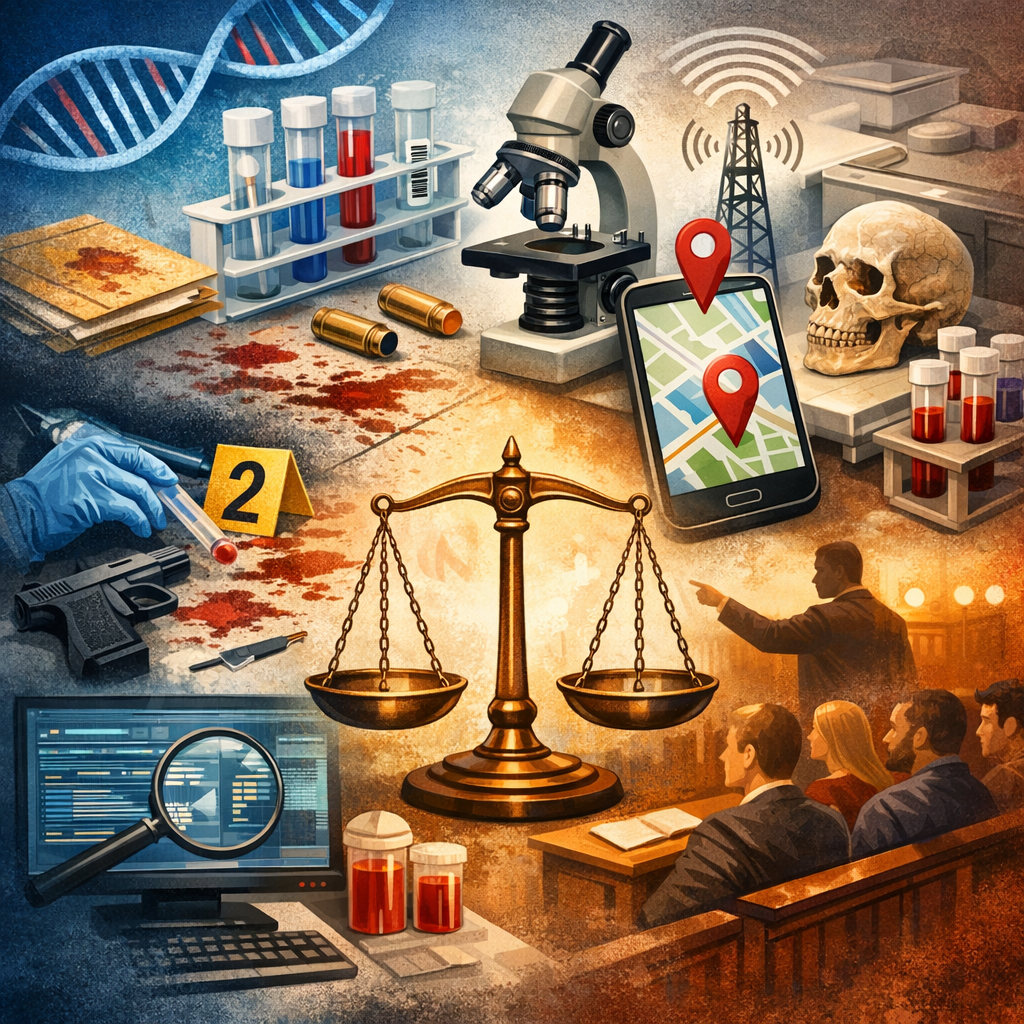
In Texas homicide cases, the prosecution builds its case on forensic evidence. DNA, blood spatter, ballistics, digital forensics, toxicology, autopsy findings, and cell tower data are presented to the jury as scientific proof that the defendant committed the killing. Jurors tend to trust this evidence because it feels objective in that it comes from laboratories, from medical examiners or from people with “forensic” in their titles.
But forensic evidence is the product of human decisions at every stage: what to collect, how to preserve it, what method to use for analysis, how to interpret the results, and how to present the conclusions. At every stage, there are assumptions, limitations, and potential errors. A defense attorney who lacks the scientific training to identify these vulnerabilities is accepting the prosecution’s forensic narrative at face value — and that is not a defense strategy.
This article explains the major categories of forensic evidence in Texas homicide cases, where each one is vulnerable to challenge, and why your defense attorney’s scientific credentials matter as much as their courtroom experience.
DNA Evidence
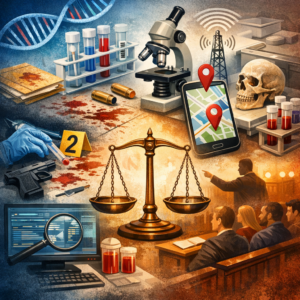
DNA is the prosecution’s most trusted forensic tool. A match between the defendant’s DNA and biological material found at the crime scene or on the victim is powerful evidence. But DNA evidence in homicide cases is far more complex than the simple “match” the prosecution presents to the jury.
Mixture Interpretation
Crime scenes frequently yield DNA samples containing genetic material from multiple contributors. When a sample is a mixture (ex. blood from the victim, skin cells from the defendant, and possibly material from a third person) the interpretation depends on the analyst’s methodology and judgment. Research has demonstrated that different analysts can reach different conclusions from the same mixture sample. This is one of the most contested areas of forensic science.
Probabilistic genotyping software (TrueAllele, STRmix) has improved consistency, but these programs involve proprietary algorithms with assumptions that can and should be examined. The defense has the right to challenge the software’s validation studies, the analyst’s input parameters, and the statistical weight assigned to a match.
Touch DNA and Transfer
Touch DNA (DNA deposited through skin contact rather than biological fluids) is increasingly used in homicide cases. But touch DNA raises a critical question that standard DNA analysis cannot answer: how and when was the DNA deposited? A person’s DNA on a murder weapon does not prove they used the weapon to kill someone. It proves only that their skin cells were on the object at some point. DNA can be transferred through handshakes, shared surfaces, laundry, and other innocent contact. Secondary and tertiary transfer (DNA moving from person A to person B to an object without person A ever touching the object) is a documented phenomenon that the prosecution rarely acknowledges.
Collection, Contamination, and Chain of Custody
Every DNA result is only as reliable as the collection and handling that preceded it. Was the sample collected using proper anti-contamination protocols? Were officers wearing gloves? Was the evidence stored at appropriate temperatures? Was the chain of custody documented without gaps? Cross-contamination at the scene, during transport, or in the laboratory can produce a DNA result that is analytically accurate but factually misleading in that the DNA is genuinely present in the sample, but it got there through contamination rather than criminal conduct.
Blood Spatter Pattern Analysis
Blood spatter pattern analysis (BPA) is used by the prosecution to reconstruct the dynamics of a homicide: where the victim was when struck, the direction and force of the blows, and the relative positions of the victim and the attacker. Crime scene analysts examine the size, shape, distribution, and directionality of bloodstain patterns to draw conclusions about the events that produced them.
The 2009 National Academy of Sciences report, Strengthening Forensic Science in the United States: A Path Forward, identified significant concerns about blood spatter analysis, including the lack of standardized methodologies, the subjective nature of pattern interpretation, and the absence of rigorous error rate studies. The 2016 President’s Council of Advisors on Science and Technology (PCAST) report reinforced these concerns, concluding that the scientific foundations for BPA are limited and that testimony about specific events (such as the number of blows or the precise position of the victim) exceeds what the scientific evidence supports.
In practice, this means that blood spatter testimony in a Texas homicide trial can be challenged on foundational grounds. The defense can argue that the analyst’s conclusions are not supported by validated scientific methodology, that the interpretation is subjective rather than empirical, and that alternative explanations for the observed patterns are equally consistent with the evidence. Huff’s scientific training allows him to cross-examine BPA experts on the methodology, not just the conclusions, and to present the NAS and PCAST critiques to the jury as grounds for reasonable doubt.
Firearms and Toolmark Analysis
Firearms analysis (commonly called “ballistics”) involves comparing markings on bullets and cartridge cases to determine whether they were fired from a specific weapon. Toolmark examiners compare striations (microscopic scratches) on recovered bullets or casings to test-fired exemplars from a suspect weapon and offer an opinion on whether they match.
The NAS and PCAST reports both identified fundamental problems with firearms and toolmark analysis. The core concern is that the discipline lacks objective, quantifiable criteria for declaring a “match.” Examiners rely on their subjective assessment of pattern similarity, and studies have shown measurable error rates including both false positives (declaring a match when the items were fired from different weapons) and false negatives. The PCAST report concluded that only one appropriately designed study (the Ames Laboratory study) had been conducted, and its results showed a false positive rate that, while low, was not zero.
For the defense, this means challenging the examiner’s methodology, asking whether objective measurement tools were used, questioning the examiner’s proficiency testing history, and presenting the NAS/PCAST conclusions to the jury. In cases where the prosecution’s firearms expert testifies to a “match to the exclusion of all other firearms,” the defense can challenge this language as exceeding what the science supports.
Digital Forensics and Cell Tower Data
Homicide investigations increasingly rely on digital evidence: cell phone records, cell tower location data, GPS history, social media activity, text messages, and device forensics. This evidence can place the defendant at or near the crime scene, establish timelines, and reveal communications relevant to motive or intent.
Cell Tower Attribution
Cell tower data shows which tower a phone connected to at a given time. Prosecutors use this to argue that the defendant was in a specific location. But cell tower attribution has known precision limitations. A single cell tower may cover an area of several square miles, and a phone may connect to a tower that is not the nearest one due to network load balancing, terrain, or signal conditions. Testifying that a defendant “was at the crime scene” based on cell tower data alone is a significant overstatement of what the evidence supports. The defense must challenge the prosecution’s cell tower expert on coverage area, sector directionality, and the absence of GPS-level precision.
Device Forensics
When law enforcement seizes a phone, computer, or other device, forensic examiners extract data including call logs, messages, photos, GPS coordinates, app data, and deleted files. The integrity of this evidence depends on proper forensic imaging protocols (Was a verified forensic image created before analysis? Were write-blocking procedures followed to prevent alteration? Was the extraction tool validated for the specific device and operating system?)
Douglas Huff’s digital forensics training gives him the ability to evaluate the prosecution’s device forensic evidence: the extraction methodology, the tool validation, the completeness of the data, and whether deleted or recovered data has been presented in proper context. In homicide cases where the prosecution relies on text messages, location data, or internet search history, the context in which that evidence is presented can be the difference between conviction and acquittal.
Social Media and Communications
Prosecutors frequently present social media posts, text messages, and other communications as evidence of motive, intent, or consciousness of guilt. A threatening text message sent hours before a killing can be devastating prosecution evidence. But these communications must be evaluated in their full context (the entire conversation, not an isolated screenshot; the relationship history between the parties; and whether the language represents a genuine threat or hyperbolic expression). The defense must challenge cherry-picked evidence by presenting the complete communication record.
Autopsy Findings and Cause of Death
The medical examiner’s autopsy report is a cornerstone of every homicide prosecution. It establishes the cause of death (the injury or disease that produced the death) and the manner of death (homicide, suicide, accident, natural, or undetermined). In most cases, the cause and manner of death are straightforward. But in some cases, particularly those involving ambiguous circumstances, pre-existing medical conditions, or deaths in custody, the medical examiner’s conclusions can and should be challenged.
Defense challenges to autopsy findings may include: alternative causes of death (a pre-existing cardiac condition rather than blunt force trauma), the distinction between correlation and causation (the defendant’s actions preceded the death but did not cause it), the adequacy of the autopsy itself (were all relevant tests performed?), and the reliability of the manner-of-death determination (was the death truly a homicide or could it have been accidental or self-inflicted?). Expert medical testimony from independent forensic pathologists is essential in these challenges.
Toxicology
Toxicology evidence in homicide cases typically involves testing the victim’s blood, urine, or vitreous humor for drugs and alcohol. This evidence can be relevant in several ways: establishing that the victim was intoxicated (potentially relevant to self-defense or provocation), establishing that the defendant drugged the victim (relevant to drug-facilitated homicide), or establishing the presence of substances that may have contributed to the cause of death.
Deandra Grant’s Master’s Degree in Pharmaceutical Science and ACS-CHAL Forensic Lawyer-Scientist designation provide the scientific foundation for evaluating toxicology evidence at a scientific level. This includes understanding detection windows (how long a substance remains detectable after ingestion), postmortem redistribution (the movement of drugs within the body after death, which can produce misleading concentration levels), analytical methodology (GC-MS, LC-MS/MS, immunoassay), and the difference between the presence of a substance and its pharmacological effect at the time of death.
Crime Scene Reconstruction
Crime scene reconstruction integrates evidence from multiple forensic disciplines (i.e. blood spatter, ballistics, wound trajectories, physical evidence positioning, and digital evidence) to reconstruct the sequence of events during a homicide. Prosecutors present these reconstructions as a coherent narrative of what happened. But reconstructions are inherently interpretive, and they are only as reliable as the individual forensic analyses that underlie them.
If the blood spatter analysis is subjective, the ballistics comparison lacks objective criteria, and the cell tower data lacks GPS-level precision, then a reconstruction built on those foundations inherits all of their weaknesses. The defense’s role is to expose these compounding uncertainties and present alternative reconstructions that are equally consistent with the physical evidence. This is where forensic science training matters most. It’s not in challenging one piece of evidence, but in demonstrating that the prosecution’s entire narrative is built on assumptions that do not withstand scientific scrutiny.
Forensic Evidence Defense at Deandra Grant Law
In Texas homicide cases, the forensic evidence is often the prosecution’s strongest asset and the defense’s greatest opportunity. Every forensic discipline has known limitations, documented error rates, and methodological vulnerabilities. Finding them requires a defense attorney with scientific training, not just legal training.
At Deandra Grant Law, Doug Huff’s ACS-CHAL Forensic Lawyer-Scientist designation and digital forensics training give him the credentials and training to evaluate forensic evidence at the scientific leve. Deandra Grant’s Master’s Degree in Pharmaceutical Science provides additional depth in toxicology and pharmacokinetics. Together, our team challenges the prosecution’s forensic case with the scientific rigor that homicide cases demand.
With offices in Dallas, Fort Worth, Allen, Denton, Waco, and Rockwall, we defend homicide cases across North Texas. Call (214) 225-7117 or visit DeandraGrantLaw.com for a confidential consultation.