
Home »

Do You Need Legal Help?

"Deandra Grant Law fights hard for their clients and is always willing to go above and beyond. They are the best firm for DWI cases in DFW and beyond. Definitely hire them to represent you in any pending cases."
- P. Williams
"Deandra Grant made a tough situation so much better. She listened to my concerns and helped me so much with my case. I would recommend her to anyone needing legal services."
- M. Haley
"Deandra Grant Law handled my case with diligence and professionalism. Deandra Grant's reputation is stellar and now I know why. She has a team of individuals who provide quality service."
- N. Coulter
As Seen On







Collin County Criminal Courts Guide
By Attorney Deandra Grant
If you’re facing a criminal charge in Collin County, understanding how the local courts work can make the process far less confusing. This guide explains where cases are heard, what each court handles, and what you can expect as your case moves through the system.
Read NowFrisco Murder Defense Attorneys
Murder is a first-degree felony in Texas, with punishment of 5 to 99 years or life in prison. Capital murder is a capital felony, punishable by life without parole or death. These are the most serious cases in the Texas criminal justice system, and they operate under specialized rules including the bifurcated guilt/punishment trial structure, the capital voir dire process, the particular procedural protections that apply to capital cases, and the specific evidentiary rules that govern murder prosecution. The defense of a murder case requires resources, experience, and time that few practice areas demand.
Murder charges arising in Frisco present an unusual procedural feature. Frisco straddles the Collin County / Denton County line roughly along the Dallas North Tollway, with eastern Frisco in Collin County and western Frisco in Denton County. Criminal jurisdiction follows the location of the arrest. A case arising in eastern Frisco is prosecuted by the Collin County District Attorney’s Office at the Collin County Courthouse in McKinney. A case arising in western Frisco is prosecuted by the Denton County District Attorney’s Office at the Denton County Courthouse in Denton.
Deandra Grant Law has defended criminal charges in both Collin County and Denton County for more than 30 years. Our Allen office serves the Collin County side of Frisco, and our Denton office serves the Denton County side. We are positioned for cases on either side of the county line without the client having to adjust representation based on where the stop occurred. Managing Partner Deandra Grant is a trained SFST instructor and holds the ACS-CHAL Forensic Lawyer-Scientist designation along with a Master of Science in Pharmaceutical Science and a Graduate Certificate in Forensic Toxicology. Partner Douglas Huff holds the same ACS-CHAL designation.
How Texas Defines Murder
Murder is defined in Texas Penal Code § 19.02. Contrary to the common-law language many out-of-state resources still use, Texas murder does not require “malice aforethought.” It requires one of three culpable states of mind described in § 19.02(b):
- Intentional or knowing conduct that causes the death of an individual (§ 19.02(b)(1)). The state must prove the defendant’s conscious objective was to cause death, or that the defendant was aware his conduct was reasonably certain to cause death.
- Intent to cause serious bodily injury combined with an act clearly dangerous to human life that causes death (§ 19.02(b)(2)). The state does not have to prove the defendant intended death (only serious bodily injury plus a clearly dangerous act that resulted in death).
- Felony murder (§ 19.02(b)(3)). A death caused during the commission, attempted commission, or immediate flight from a felony other than manslaughter, where the defendant committed an act clearly dangerous to human life. The state does not have to prove any intent to kill or injure. This is the doctrine by which a co-conspirator who never pulled a trigger can be convicted of murder.
Punishment for Murder
Murder is a first-degree felony. Under Texas Penal Code § 12.32, the punishment range is 5 to 99 years or life in the Texas Department of Criminal Justice, and a fine of up to $10,000.
Sudden Passion
Texas Penal Code § 19.02(d) allows a defendant to raise sudden passion arising from adequate cause at the punishment phase. If the jury (or judge, in a bench trial on punishment) finds by a preponderance of the evidence that the defendant caused the death under the immediate influence of sudden passion arising from an adequate cause, the offense is punished as a second-degree felony (2 to 20 years and a fine of up to $10,000). Sudden passion does not reduce the conviction; it reduces the punishment range. The jury still finds the defendant guilty of murder.
Capital Murder
Capital murder is defined in Texas Penal Code § 19.03. A person commits capital murder by committing murder under § 19.02(b)(1) (intentionally or knowingly causing death) plus one or more aggravating circumstances. As of the 2023 legislative session, there are ten aggravators:
- Murder of a peace officer or fireman acting in the lawful discharge of an official duty, when the defendant knows the victim’s status (§ 19.03(a)(1)).
- Intentional murder in the course of committing or attempting to commit kidnapping, burglary, robbery, aggravated sexual assault, arson, obstruction or retaliation, or a terroristic threat under § 22.07(a)(1), (3), (4), (5), or (6) (§ 19.03(a)(2)).
- Murder for remuneration or the promise of remuneration, or hiring another to commit murder for remuneration (§ 19.03(a)(3)).
- Murder while escaping or attempting to escape from a penal institution (§ 19.03(a)(4)).
- Murder by a person incarcerated in a penal institution of an employee of the institution, or murder with intent to establish, maintain, or participate in a criminal combination (§ 19.03(a)(5)).
- Murder by a person while incarcerated for capital murder, murder, or serving a life or 99-year sentence for aggravated kidnapping, aggravated sexual assault, or aggravated robbery (§ 19.03(a)(6)).
- Murder of more than one person during the same criminal transaction, or during different transactions pursuant to the same scheme or course of conduct (§ 19.03(a)(7)).
- Murder of an individual under 10 years of age (§ 19.03(a)(8)).
- Murder of an individual 10 years of age or older but younger than 15 (§ 19.03(a)(9), added by Lauren’s Law). The death penalty is not available when this is the sole aggravating factor.
- Murder in retaliation for or on account of the service or status of a judge or justice of any listed Texas court (§ 19.03(a)(10)).
Punishment for Capital Murder
Capital murder is a capital felony. Under Texas Penal Code § 12.31, if the state seeks the death penalty and the defendant was 18 or older at the time of the offense, punishment is either death or life without parole, determined by jury answers to the special issues in Code of Criminal Procedure Article 37.071. If the state does not seek death, or if the defendant was under 18 at the time of the offense (United States Supreme Court, Roper v. Simmons), the punishment is mandatory life without parole. There is no parole eligibility on a capital murder conviction.
Other Offenses
Chapter 19 of the Penal Code includes two offenses that often become the actual focus of plea negotiation or a lesser-included instruction at trial.
Manslaughter (§ 19.04)
Recklessly causing the death of another. Second-degree felony; 2 to 20 years and a fine of up to $10,000.
Criminally Negligent Homicide (§ 19.05)
Causing the death of another by criminal negligence. State jail felony; 180 days to 2 years and a fine of up to $10,000.
Intoxication Manslaughter (§ 49.08)
A death caused by the defendant’s intoxication while operating a motor vehicle, watercraft, aircraft, or amusement ride. Second-degree felony; 2 to 20 years, a fine of up to $10,000, and 240 to 800 hours of community service. Enhanced to first-degree felony (5 to 99 years or life) if the victim is a peace officer, firefighter, or emergency medical services personnel on duty.
The Forensic Framework
Murder cases are forensic cases. Modern prosecutions involve multiple evidentiary streams, each with its own methodology and its own contestability:
- Autopsy and cause-of-death analysis. Medical examiner conclusions on cause and manner of death, time of death, mechanism, and toxicology are central to most murder cases. Autopsy protocol adherence, qualifications of the examiner, and the differential diagnoses considered are all examinable.
- Ballistics and firearms examination. Bullet matching, trajectory analysis, distance-of-fire determinations, and firearms identification are specialty forensic disciplines with known error rates. The National Academy of Sciences has expressed concern about overstatement of the reliability of certain firearms identification claims.
- DNA evidence. Collection, chain of custody, laboratory analysis (typically at the DPS Crime Lab in Garland, which serves both Collin and Denton Counties), and statistical interpretation are all examinable. Touch DNA and mixture interpretation raise specific challenges.
- Digital evidence. Cell phone location records, text messages, social media, vehicle telematics, and surveillance footage are increasingly central to murder investigations. Partner Douglas Huff’s digital forensics training applies directly to this evidence stream.
- Eyewitness identification. Eyewitness misidentification is the leading cause of wrongful conviction in murder cases. Identification procedures (photo arrays, live lineups, showups) must meet due process standards. Suggestive procedures can render identifications unreliable.
- Custodial statements and Miranda. Miranda warnings, the voluntariness of any waiver, and compliance with Texas CCP Article 38.22 on statements of the accused are foundational. Suppressed statements frequently change the trajectory of a murder case.
Related Blogs

When the Video Might Be a Lie: How Texas Defense Lawyers Are Fighting Deepfake-Era Evidence
For decades, a grainy surveillance clip or a damning social-media video was close to game-over [...]

What Counts as ‘Reasonable Suspicion’? A Plain-English Guide to the Supreme Court’s Latest Fourth Amendment Ruling
On April 20, 2026, the United States Supreme Court issued its decision in District of [...]

Bite Marks, Hair Analysis, and the Science Courts Are Still Admitting
In 2016, the President’s Council of Advisors on Science and Technology (PCAST) published a detailed [...]

Cold Cases and the Fourth Amendment: What Genetic Genealogy Means for Defendants
Florida Attorney General James Uthmeier announced this week a $600,000 partnership with Othram (a Texas-based [...]
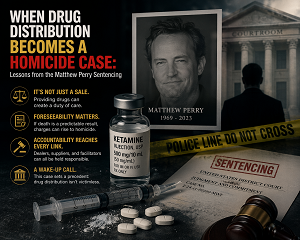
When Drug Distribution Becomes a Homicide Case: Lessons from the Matthew Perry Sentencing
On April 8, 2026, U.S. District Judge Sherilyn Peace Garnett sentenced Jasveen Sangha (the Los [...]

Criminal Justice Reform in 2026: What It Means for Texas Defendants
National headlines about criminal justice reform in 2026 tell a story of accelerating bipartisan progress [...]

How Do Police Track Your Online Activity And Can That Evidence Be Challenged?
Law enforcement agencies have increasingly sophisticated tools for monitoring and documenting internet activity. They can [...]

What to Do if You’re Falsely Accused of Sexual Assault in Texas
Few things are more terrifying than being accused of something you did not do and [...]
Defenses to Murder Charges in Texas
The fact that someone died does not mean someone committed murder. Chapter 9 of the Texas Penal Code codifies the justifications that remove criminal liability for conduct that would otherwise be a crime. In Collin County murder cases, the following justifications and defenses are routinely in play:
Self-Defense (§ 9.31) and Deadly Force in Defense of Person (§ 9.32)
A person is justified in using force (and, in circumstances specified in § 9.32, deadly force) against another when and to the degree the actor reasonably believes the force is immediately necessary to protect against the other’s use or attempted use of unlawful force.
Castle Doctrine and No Duty to Retreat
Under § 9.32(b), a defendant’s belief that deadly force was immediately necessary is presumed reasonable when the other person was unlawfully and with force entering, or had unlawfully and with force entered, the defendant’s occupied habitation, vehicle, or place of business, subject to statutory conditions. Under § 9.31(e), a defendant who is in a place the defendant has a right to be, is not engaged in criminal activity, and did not provoke the other person has no duty to retreat before using force or deadly force.
Defense of a Third Person (§ 9.33) and Defense of Property (§§ 9.41–9.43)
Texas also justifies the use of force in defense of another person and, in specified circumstances, the use of force and deadly force to protect land or tangible, movable property.
Other Defenses
- Mistaken identification, which remains one of the leading causes of wrongful murder convictions.
- Challenges to forensic evidence (ex. DNA transfer and mixture interpretation, bullet and cartridge case comparison, bloodstain pattern analysis, autopsy findings, and cell-site location information).
- Accomplice witness corroboration under Code of Criminal Procedure Article 38.14.
- Alibi.
- Insanity under Penal Code § 8.01, an affirmative defense that must be proved by a preponderance.
- Involuntary intoxication under § 8.04 (not a defense but may be used in mitigation)
Bail in a Murder Case
Article I, § 11 of the Texas Constitution makes all prisoners bailable except for capital offenses when the proof is evident. In practice, this means:
- A defendant charged with murder is entitled to a reasonable bail. The amount is set with reference to the factors in Code of Criminal Procedure Article 17.15, including the nature of the offense, the defendant’s ability to make bail, future safety of the community, and likelihood of appearance.
- A defendant charged with capital murder can be held without bail only if the state establishes at a hearing that the proof is evident (a standard higher than probable cause) and only if the state is seeking the death penalty.
- A writ of habeas corpus under Article 11 of the Code of Criminal Procedure is the procedural vehicle for contesting a no-bail hold or an excessive bail.
How Murder Cases Are Defended
No two murder cases are the same, but the defense work on a serious murder case follows a recognizable arc.
Early Investigation
The first 30 to 60 days after arrest are critical. Scenes change, witnesses forget, and surveillance video gets overwritten. An independent investigation (our investigators, our witness interviews, our scene documentation) preserves evidence that the state does not prioritize.
Forensic Challenge
Modern murder prosecutions rely heavily on forensic evidence: DNA, firearm and toolmark identification, bloodstain pattern analysis, digital forensics, cell-site location, and autopsy findings. Each of these disciplines has identifiable failure points, and each requires cross-examination from a lawyer who understands the science. Deandra Grant Law brings forensic training built for exactly this kind of cross-examination.
Pretrial Motions
Suppression motions, motions to quash, discovery litigation under the Michael Morton Act, and Daubert/Kelly challenges to the state’s experts frequently determine the shape of a case long before trial.
Trial and Sentencing
When a murder case goes to trial, the defense has to be prepared for every phase: jury selection, guilt-innocence, and (if convicted) punishment. In a capital case, the punishment phase is a trial of its own, with mitigation evidence and the Article 37.071 special issues driving the result.
Frequently Asked Questions
What’s the difference between murder and capital murder?
Capital murder is intentional or knowing murder under § 19.02(b)(1) plus one of ten statutory aggravating circumstances in § 19.03(a). Murder without an aggravator is a first-degree felony punishable by 5 to 99 years or life. Capital murder is punishable only by death or life without parole.
What’s the difference between murder and manslaughter?
Murder under § 19.02 requires intentional, knowing, or specific reckless conduct. Manslaughter under § 19.04 is recklessly causing the death of an individual (a second-degree felony carrying 2 to 20). Criminally negligent homicide under § 19.05 is a state jail felony. The difference in culpable mental state drives which offense is charged and what punishment range applies.
Can I get bail if I’m charged with murder?
Yes. Murder is a bailable offense under Article I, § 11 of the Texas Constitution. Capital murder may be a no-bail offense if the state is seeking the death penalty and establishes at a hearing that the proof is evident.
What is sudden passion?
Sudden passion under § 19.02(d) is a punishment-phase mitigator. At the punishment phase of a murder trial, the defendant may prove by a preponderance of the evidence that the murder was committed “under the immediate influence of sudden passion arising from an adequate cause.” If the jury finds sudden passion, the punishment range drops from first-degree (5 to 99 or life) to second-degree (2 to 20). The conviction is still murder. Sudden passion is not a defense to guilt.
What is felony murder?
Under § 19.02(b)(3), a person commits murder if, during the commission or attempted commission of a felony (other than manslaughter), the person commits an act clearly dangerous to human life that causes the death of an individual. Felony murder does not require intent to kill. The underlying felony supplies the culpable mental state. This means a robbery, burglary, or other felony can become a murder prosecution even if the defendant did not intend the death.
What is the HB 6 fentanyl murder provision?
Penal Code § 19.02(b)(4), effective September 1, 2023, makes it murder to knowingly manufacture or deliver a Penalty Group 1-B substance (fentanyl and certain analogues under HSC § 481.1022) when the recipient dies from ingestion. Unlike felony murder, this provision does not require a separate dangerous act. The delivery plus the death is enough to support murder liability. This is a significant expansion of murder prosecution that did not exist before September 1, 2023.
Why Deandra Grant Law for Frisco Murder Defense
-
- Offices in Allen and Denton — both sides of Frisco covered. 30+ years in both Collin County and Denton County courts. 500+ trials to verdict. Wherever in Frisco the arrest occurred, the county courthouse is familiar ground.
- 500+ trials to verdict. Managing Partner Deandra Grant has tried more than 500 cases to verdict over 30+ years of practice, including murder cases in both Collin County and Denton County.
- Former prosecutor. Deandra Grant is a former prosecutor — understanding how the State builds, charges, and tries a murder case is fundamental to defending one.
- ACS-CHAL Forensic Lawyer-Scientist — Deandra Grant and Douglas Huff. Toxicology, autopsy, DNA, and chemistry evidence read at the laboratory-data level.
- Digital forensics training — Douglas Huff. Cell phone records, location data, surveillance footage, and vehicle telematics evaluated at the technical level.
- Article 38.23 — no good faith exception. Every murder case begins with the lawfulness of the search, seizure, or custodial statement.
- Federal defense capability. James Lee Bright handles federal cases in the Eastern District of Texas (Sherman Division) — the federal district for both Collin and Denton Counties.
- Author of 17 law books including A First Offender’s Guide to Texas Criminal Courts
- Texas Super Lawyer since 2011.
- AV® Preeminent rated by Martindale-Hubbell®.
If you are facing murder charges in Frisco (whether on the Collin County or Denton County side) call (214) 225-7117 for a free, confidential consultation. Or schedule online at texasdwisite.com.
Related Blogs
When the Video Might Be a Lie: How Texas Defense Lawyers Are Fighting Deepfake-Era Evidence
For decades, a grainy surveillance clip or a damning social-media video was close to game-over [...]
What Counts as ‘Reasonable Suspicion’? A Plain-English Guide to the Supreme Court’s Latest Fourth Amendment Ruling
On April 20, 2026, the United States Supreme Court issued its decision in District of [...]
Bite Marks, Hair Analysis, and the Science Courts Are Still Admitting
In 2016, the President’s Council of Advisors on Science and Technology (PCAST) published a detailed [...]
Cold Cases and the Fourth Amendment: What Genetic Genealogy Means for Defendants
Florida Attorney General James Uthmeier announced this week a $600,000 partnership with Othram (a Texas-based [...]
When Drug Distribution Becomes a Homicide Case: Lessons from the Matthew Perry Sentencing
On April 8, 2026, U.S. District Judge Sherilyn Peace Garnett sentenced Jasveen Sangha (the Los [...]
Criminal Justice Reform in 2026: What It Means for Texas Defendants
National headlines about criminal justice reform in 2026 tell a story of accelerating bipartisan progress [...]
How Do Police Track Your Online Activity And Can That Evidence Be Challenged?
Law enforcement agencies have increasingly sophisticated tools for monitoring and documenting internet activity. They can [...]
What to Do if You’re Falsely Accused of Sexual Assault in Texas
Few things are more terrifying than being accused of something you did not do and [...]
Related Videos
Important Criminal Videos
Choosing a criminal defense attorney
Why shouldn’t I use a court ordered attorney
Your rights after a drug crime arrest
Steps to take after a drug crime arrest
How can an attorney help me with a warrant?
Consequences of marijuana possession
How long does a criminal defense case take?
Client Reviews

“Deandra Grant Law – Criminal & DWI Defense handled my case with diligence and professionalism. Deandra Grant’s reputation is stellar and now I know why. She has a team of individuals who provide quality service.”