For twenty-seven years, Jimmie “Chris” Duncan sat on Louisiana’s death row for a murder that, the courts have now found, never happened. In June 2026, the Louisiana Supreme Court unanimously affirmed that Duncan is factually innocent and threw out his conviction and death sentence. The child he was accused of killing (his then-girlfriend’s two-year-old daughter) had accidentally drowned in a bathtub. What sent Duncan to death row instead was a bite mark. Or, more precisely, what a now-discredited forensic dentist said was a bite mark. The court called that evidence “scientifically indefensible.” It was never science at all.
How a Bathtub Accident Became a Capital Murder
The little girl died in 1993. By the time Duncan was tried in 1998, the case against him rested substantially on the testimony of two Mississippi forensic experts: a dentist, Dr. Michael West, and a pathologist, Dr. Steven Hayne. West told the jury that marks on the child’s body were human bites, and that they matched Duncan’s teeth. That testimony helped send him to death row.
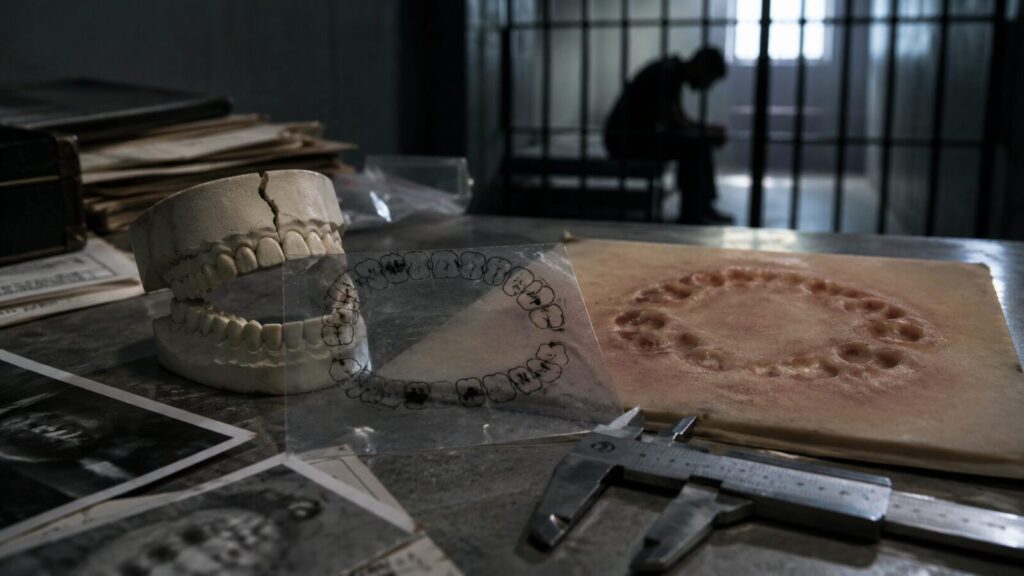
The jury never saw how that “match” was made. Years later, Duncan’s post-conviction lawyers surfaced a videotape of West pressing a mold of Duncan’s teeth into the dead child’s skin. In effect he manufactured the very marks he then presented as Duncan’s bite. West and Hayne were a forensic pairing whose work has been tied to at least nine other wrongful convictions; Duncan was the last person left on any death row because of them. New evidence showed the death was an accidental drowning, and a jailhouse informant who had claimed Duncan confessed recanted. In affirming Duncan’s innocence, one justice compared bite-mark evidence to the “trial by water” once used against accused witches (practices we now see as absurd) and called the evidence against Duncan similarly specious. Prosecutors have signaled they may still try to retry him, so the case may not be fully over. But as forensic science, the bite-mark evidence is finished.
The Difference Between Proven and Merely Believed
The Duncan case is not really a story about one dishonest witness. It is a story about a whole category of “forensic science” that courts trusted for decades without ever asking whether it actually worked. And that points to a distinction every juror (and every defendant) should understand: not all forensic evidence is created equal.
Some forensic disciplines have been validated. They have been tested against known answers, their error rates have been measured, examiners are checked with blind proficiency testing, and results rest on a real statistical foundation. Single-source DNA typing is the model. When an analyst reports a DNA match, the strength of that match can be stated as an actual number, and the underlying method has been independently confirmed to do what it claims. That is what it looks like when a technique has earned its place in a courtroom.
Other disciplines were never validated at all. They were simply admitted, case after case, until their long use in court was mistaken for proof that they worked. Bite-mark comparison is the clearest example. It rests on two assumptions that have never been established: that every person’s teeth are unique, and that human skin faithfully records those teeth. Neither is true in any provable way. When researchers showed board-certified forensic dentists photographs of injuries, the dentists could not even reliably agree on which images were bite marks at all, never mind whose. The 2009 National Academy of Sciences report and a 2016 report from the President’s Council of Advisors on Science and Technology both reached the same conclusion: bite-mark matching has no scientific basis for identifying a person to the exclusion of others.
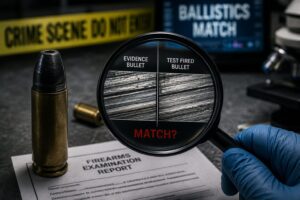
Bite marks are not alone. Microscopic hair comparison collapsed when the FBI itself admitted its examiners had given scientifically flawed testimony favoring the prosecution in the overwhelming majority of cases it reviewed. Arson investigation’s old “pour patterns” and other burn indicators, once treated as proof of a set fire, turned out to be things an accidental fire can produce on its own. Even long-accepted firearms and toolmark “matching” is now under serious appellate scrutiny which is a story we tell in a separate piece, and a shift you can now trace ruling by ruling in a new public database of forensic-admissibility decisions from Duke Law, linked below. The common thread is simple: a technique is not science because a courtroom has accepted it for a hundred years. It is science when it has been tested and its rate of error is known. Bite-mark comparison never cleared that bar.
Texas Saw It Coming
Texas was ahead of the country on this. In 2016, the Texas Forensic Science Commission became the first forensic body in the nation to recommend a moratorium on bite-mark evidence in criminal cases, and to call for a review of every Texas conviction that had relied on it. That was a remarkable step for a state’s own forensic regulator to take, and it put Texas out front of a reckoning the rest of the country is still catching up to.
What drove it was a case close to home. Steven Mark Chaney was convicted of a Dallas murder in 1987, largely on a forensic dentist’s testimony that his teeth matched a bite mark on one of the victims. Chaney served 28 years before he was released in 2015 and formally declared actually innocent in 2018. The Commission’s review surfaced the same hard truth the Duncan case would later dramatize on a national stage: the discipline simply could not do what its practitioners claimed it could.
What a Texas Defendant Can Do: Article 11.073
If a Texas conviction was built on forensic evidence that has since fallen apart, Texas law provides a specific door and it was, once again, first in the nation. In 2013 the Legislature enacted Article 11.073 of the Code of Criminal Procedure, often called the “junk science” writ. It allows a person to seek relief when relevant scientific evidence was not available at the time of trial, or when the science has since changed and had the current science been presented that person likely would not have been convicted.
This is the mechanism that has already freed Texans convicted on discredited bite-mark testimony, outdated arson science, and other methods that did not survive a second look. It is how Steven Chaney won his freedom. It exists precisely because the science under a conviction can collapse years after the trial is over as it did, spectacularly, for Jimmie Duncan across the state line. Louisiana reached Duncan through its own newer factual-innocence law; in Texas, Article 11.073 is the tool that matters, and using it well takes a lawyer who can actually read the science, not just cite the case names.
The Bottom Line
Real, validated forensic science convicts the guilty and clears the innocent every day, and nothing here is an argument against it. The argument is against treating the label “forensic science” as a guarantee. Some of what has been sold to juries under that label was tested and proven; some of it was only ever believed. For twenty-seven years, the gap between those two things was the difference between a free man and a condemned one. When a conviction rests on the kind of evidence that never should have counted as science, the law has an answer and in Texas, that answer is Article 11.073.
Convicted on Forensic Evidence That No Longer Holds Up?If you or someone you love was convicted in Texas on bite-mark comparison, discredited arson science, hair microscopy, or another forensic method that has since been undermined, Article 11.073 may open a path to relief. Deandra Grant Law handles serious criminal-defense and post-conviction matters and brings genuine forensic training to the science behind the case. Call (214) 225-7117 • texasdwisite.com |
Sources & Further Reading
- State v. Duncan, No. 2025-KP-01014 (La. June 29, 2026) — affirming factual innocence and vacating the conviction and death sentence. org
- Death Penalty Information Center, “Louisiana Supreme Court Affirms Factual Innocence Finding for Jimmie Duncan” (June 29, 2026). org
- Innocence Project — case coverage and attorney statement on Jimmie “Chris” Duncan (2025–2026). org
- ProPublica / Verite News (Richard A. Webster), “Louisiana Frees Death Row Prisoner Jimmie Duncan” (June 2026). org
- Texas Forensic Science Commission bite-mark recommendation (2016), the first such moratorium in the nation; see also the Steven Chaney exoneration. org
- National Academy of Sciences, “Strengthening Forensic Science in the United States: A Path Forward” (2009); PCAST, “Forensic Science in Criminal Courts: Ensuring Scientific Validity of Feature-Comparison Methods” (2016).
- Code Crim. Proc. Art. 11.073 — Texas’s “junk science” writ (2013).
- The Forensic Expert Evidence Database, Wilson Center for Science and Justice, Duke Law is a free, searchable record of how courts across all fifty states and the federal system have admitted, limited, or excluded firearms, fingerprint, and shoeprint testimony over the past century. forensic-case-databases.law.duke.edu
- Related, from our blog: firearms and toolmark “ballistics matching” under appellate scrutiny which is the same reckoning but a different discipline. com