
Overview
A DWI case is a chain, and a strong defense tests every link in order: the stop, the arrest, the field sobriety tests, and the breath or blood science. The state has to justify pulling you over, justify arresting you, administer the field tests correctly, and produce a chemical test result that is both lawfully obtained and scientifically reliable.
A single broken link, an unjustified stop, an arrest without probable cause, a botched test, a flawed BAC, can lead to suppressed evidence, a reduced charge, or a dismissal. The defense is not one argument; it is a systematic attack on the weakest point in the state’s case.
A DWI case is a chain
Prosecutors present a DWI as a straight line from a traffic stop to a BAC number to a conviction. In reality it is a chain of separate steps, each of which the state must justify, and each of which can fail. A strong defense does not look for one magic argument. It works through the case in order and finds the weakest link, because a single failure can change everything that follows it. See how police prove a DWI.
The four links the defense tests
Each stage of a DWI is its own opportunity, and each has a dedicated page that goes deeper.
- The stop. Did the officer have reasonable suspicion to pull you over? An unjustified traffic stop can taint everything obtained afterward.
- The arrest. Was there probable cause to arrest, or did the officer leap ahead of the evidence?
- The field sobriety tests. Were the standardized field sobriety tests administered and scored to protocol, on a suitable surface, to a suitable subject?
- The chemical test. Was the breath or blood test lawfully obtained, and is the result scientifically reliable?
Finding a single failure in this chain can reduce or end the case.
The defense strategies that follow
Once the weak links are identified, the framework turns them into specific moves.
- Suppress the evidence. If the stop, arrest, or search was unlawful, a motion to suppress under Article 38.23 can exclude the evidence, and because Texas has no broad good-faith exception, that holds even when the officer believed they were acting properly. Losing a key piece of evidence often collapses the case.
- Challenge the breath test. The Intoxilyzer 9000’s calibration, the observation period, mouth alcohol, and the assumed partition ratio are all attackable.
- Challenge the blood test. The draw, the tube and preservative, in vitro fermentation, coelution, the chain of custody, and the lab’s own procedures are all fair game.
- Explain the evidence innocently. Medical conditions, fatigue, anxiety, and the rising-BAC issue can account for what looks like impairment or inflate a result.
The science has to pass a reliability test first (Kelly)
There is a legal gate the breath or blood science has to pass before a jury ever hears it. Under Kelly v. State, scientific evidence is admissible only if the State proves, by clear and convincing evidence, three things: that the underlying theory is valid, that the technique is valid, and that it was properly applied in your case. That last requirement is the opening. If the State cannot show the test was run correctly on the night in question, the result can be excluded before trial, the same gatekeeping that governs the HGN eye test. The catch is that the defense has to ask for this analysis; it does not happen on its own.
What a successful defense produces
The framework is aimed at outcomes, not arguments for their own sake. Depending on the case, a strong defense can lead to a dismissal when key evidence is suppressed or the proof falls short, a reduction (for example, keeping a 0.15-plus reading below the line so a first offense stays a sealable Class B), or a negotiated path like deferred adjudication or a diversion program that keeps a conviction off your record. The right target depends on the facts, but every one of them starts with testing the chain.
Why the science is the difference
The first three links are legal arguments most defense lawyers can make. The fourth, the chemical test, is where most defenses stop and where the real fight often is. Challenging breath and blood evidence at the level of the chemistry takes training most attorneys do not have. Deandra Grant Law is led by an ACS-CHAL Forensic Lawyer-Scientist with a Master’s Degree in Pharmaceutical Science and a Graduate Certificate in Forensic Toxicology, trained to operate and maintain the Intoxilyzer, who teaches gas chromatography at Axion Labs, authors the Texas DWI Manual, and is a certified SFST instructor. Partner Douglas Huff holds the same ACS-CHAL designation. With more than 30 years and 500 trials behind the firm, these challenges are made at the level of the science, not just the legal argument.
Frequently Asked Questions
How do you fight a DWI in Texas?
By testing every link in the state’s case in order: the stop, the arrest, the field sobriety tests, and the breath or blood science. A single failure, such as an unjustified stop or an unreliable test, can lead to suppressed evidence, a reduced charge, or a dismissal.
Can a DWI be dismissed?
Yes. If key evidence is suppressed because the stop, arrest, or search was unlawful, or if the chemical test is unreliable, the case can be dismissed or the state may be unable to prove it.
What is the most important part of a DWI defense?
There is no single part; the defense targets the weakest link. Often the chemical test is the decisive battleground, because breath and blood results can be challenged on both the procedure and the science.
Can I get a DWI reduced instead of dismissed?
Often, yes. Strategies include keeping a 0.15-plus reading below the line so a first offense stays a sealable Class B, negotiating a lesser charge, or pursuing deferred adjudication or a diversion program.
Do I have a defense if I failed the breath or blood test?
Possibly. Breath and blood tests can be challenged on calibration, procedure, contamination, lab error, and the underlying science, and medical conditions or the rising-BAC issue can explain a high reading.
Is involuntary intoxication a defense to a DWI in Texas?
No. Because Texas DWI requires no culpable mental state, involuntary intoxication is not a defense by itself, though how you became intoxicated may still matter for challenging the test result or in mitigation.
Every DWI Case Has a Weak Link. The Job Is to Find It.
A strong defense tests the stop, the arrest, the tests, and the science, in order. Deandra Grant Law brings ACS-CHAL forensic training to DWI cases across Dallas, Fort Worth, North Texas, and Waco. Call (214) 225-7117 for a free, confidential consultation.
Related Defenses Topics
- Motion to Suppress — How illegally obtained evidence gets thrown out.
- Challenging the Breath Test — Calibration, observation, mouth alcohol, and more.
- Challenging the Blood Test — Collection, storage, chain of custody, and lab error.
- Medical Conditions Defense — The conditions that mimic intoxication or skew results.
Attorneys Who Handle This Charge

Douglas E. Huff
Read Attorney Profile
Jada Fairley
Read Attorney Profile
Jason Bowes
Read Attorney Profile
Kevin Sheneberger
Read Attorney ProfileOffices Handling These Cases
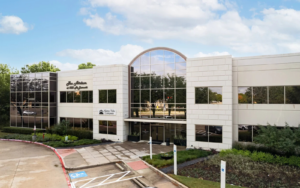
Allen
1333 W. McDermott Drive, Suite 180, Allen, TX 75013 Visit This Office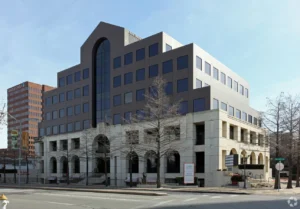
Dallas (HQ)
3300 Oak Lawn Avenue, Suite 700, Dallas, TX 75219 Visit This Office
Denton
1317 E. McKinney Street, Suite 101A, Denton, TX 76209 Visit This Office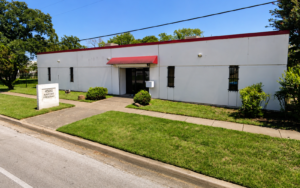
Fort Worth
4500 Airport Freeway, Suite 101, Fort Worth, TX 76117 Visit This Office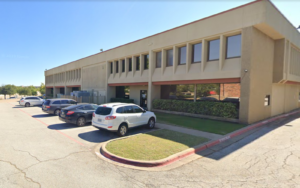

Waco
605 Austin Avenue, Suite 5, Waco, TX 76701 Visit This OfficeBooks & Guides
The Texas DWI Manual
Get the Book
Surviving Your DWI in McLennan County
Get the Book
Surviving Your DWI in Bell County
Get the Book
Surviving Your DWI in Hays County
Get the Book
Surviving Your DWI in Tarrant County
Get the Book
Surviving Your DWI in Travis County
Get the Book
Surviving Your DWI in Kaufman County
Get the Book
Surviving Your DWI in Rockwall County
Get the Book
Surviving Your DWI in Ellis County
Get the Book
Surviving Your DWI in Grayson County
Get the Book
Surviving Your DWI in Cooke County
Get the Book
Surviving Your DWI in Collin County
Get the Book
Surviving Your DWI in Denton County
Get the Book
Surviving Your DWI in Dallas County
Get the BookBlogs

DWI Defense Expertise Recognized at National Criminal Justice Seminar
Read Article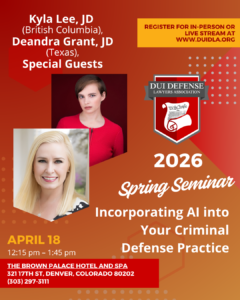
Texas DWI Defense Seminar 2026: How AI Is Changing Criminal Defense
Read Article
Blood Sample Integrity in DWI Cases: Everything That Can Go Wrong Between the Draw and the Lab
Read Article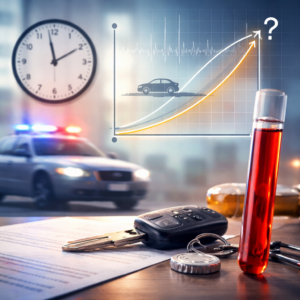
Retrograde Extrapolation: The Math Prosecutors Use to Guess Your BAC at the Time of Driving — And Why It’s Often Wrong
Read Article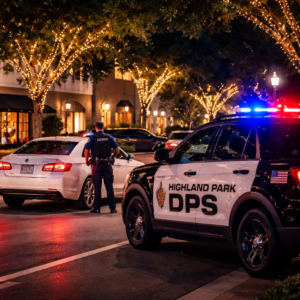
Highland Park DWI: What Makes These Cases Different
Read Article
The DWI Defense Strategy Most Texas Attorneys Don’t Offer: Mitigation
Read ArticleVideos
What Documents Should I Gather for My DWI Defense in Texas? | Call Deandra Grant Law for Help Today
Watch the Video
Breathalyzer Calibration Issues In Texas: How They Can Affect Your DWI Defense
Watch the Video
Can DWI Defenses and Legal Strategies Help Your Case in Texas? | Learn More at Deandra Grant Law
Watch the Video
Texas DWI Defense Lawyers | Get the Legal Help You Deserve – Contact Deandra Grant Law Today!
Watch the Video