

Overview
A minor in possession (MIP) charge applies when a person under 21 possesses an alcoholic beverage in Texas. It is generally a Class C misdemeanor, but the consequences reach beyond a fine: a conviction can bring community service, an alcohol-awareness course, and a driver license suspension, and the penalties increase with prior offenses.
For a young person, the record and the license impact can matter far more than the fine, which is why an MIP is worth handling carefully rather than just paying.
What a minor in possession charge is
Under the Texas Alcoholic Beverage Code, it is an offense for a minor, a person under 21, to possess an alcoholic beverage. Possession can be broader than people expect; it does not require that the minor was drinking, only that they possessed the alcohol. An MIP is generally charged as a Class C misdemeanor, the lowest offense level, but unlike most Class C charges, it carries a set of additional consequences aimed specifically at minors.
The penalties go beyond the fine
The fine for an MIP is modest, but it is rarely the whole story. A conviction can also bring:
- Community service, often a set number of hours.
- An alcohol-awareness course, which the minor (and sometimes a parent) must complete.
- A driver license suspension, which can apply even though the offense had nothing to do with driving.
- Escalating penalties for second and later offenses, which can climb beyond the basic Class C range.
For a teenager or college student, the license suspension and the record can have a bigger practical effect than the fine, touching their ability to drive to school or work and to pass a background check later. See DWI collateral consequences and DWI license suspension.
Why an MIP is worth taking seriously
Because an MIP is just a Class C, the instinct is often to pay it and move on. But for a young person at the start of their record, that instinct can be costly. A conviction can surface on background checks for jobs, internships, and schools, and the license suspension can disrupt daily life. Handling the charge carefully, when it can still be challenged, reduced, or kept off the record, protects opportunities that matter more than the immediate penalty. See public intoxication.
There are often options aimed at keeping a first MIP off a young person’s permanent record, which is exactly the kind of outcome worth pursuing while the case is still open. See expunction and non-disclosure.
How the charge can be challenged
An MIP has elements the state must prove, and they can be contested: whether the minor actually possessed the alcohol, whether the stop or contact with the officer was lawful, and whether the evidence was lawfully obtained. As with any alcohol charge, an unlawful stop or search can undermine the case. And because a dismissal can open the door to clearing the record, fighting the charge is also the path to protecting the minor’s future. See how police prove a DWI.
How Deandra Grant Law handles it
The firm understands that for a minor, the stakes are about the future, not the fine. Managing Partner Deandra Grant and the team work to protect a young client’s record and license, pursuing dismissals, reductions, and record-clearing options where possible. With more than 30 years and 500 trials behind the firm, a young person’s first brush with an alcohol charge is treated as something worth defending, not just paying.
Frequently Asked Questions
What is a minor in possession charge in Texas?
It is an offense under the Alcoholic Beverage Code for a person under 21 to possess an alcoholic beverage. It does not require that the minor was drinking, only that they possessed the alcohol, and it is generally a Class C misdemeanor.
What are the penalties for an MIP in Texas?
Beyond a fine, a conviction can bring community service, an alcohol-awareness course, and a driver license suspension, and the penalties increase with prior offenses. For a young person, the license impact and record often matter more than the fine.
Can an MIP suspend my license?
Yes. A minor in possession conviction can lead to a driver license suspension even though the offense had nothing to do with driving. This is one of the consequences that makes an MIP more than a simple fine.
Does an MIP go on your record?
It can. A conviction creates a record that may appear on background checks for jobs, internships, and schools. There are often options aimed at keeping a first MIP off a young person’s permanent record.
Should I just pay a minor in possession ticket?
Paying it is pleading guilty and creates a record, along with the license and course consequences. Because those can affect a young person’s future, it is worth evaluating whether the charge can be challenged, reduced, or kept off the record first.
How is an MIP different from an underage DWI?
An MIP is about a minor possessing alcohol; it does not require driving. An underage DWI involves a minor operating a vehicle with alcohol in their system and is a separate, more serious matter.
For a Young Person, an MIP Is About the Future, Not the Fine.
A conviction can bring a license suspension and a record that follows them. Deandra Grant Law works to protect young clients across Dallas, Fort Worth, North Texas, and Waco. Call (214) 225-7117 for a free, confidential consultation.
Related Offenses Topics
- Public Intoxication — A Class C charge that can still create a record.
- Open Container — Why an open bottle is its own Texas offense.
- Evading Arrest — A separate charge that often gets added to a DWI.
- Obstruction of a Highway — A Class B offense sometimes offered in place of a DWI.
Attorneys Who Handle This Charge

Douglas E. Huff
Read Attorney Profile
Jada Fairley
Read Attorney Profile
Jason Bowes
Read Attorney Profile
Kevin Sheneberger
Read Attorney ProfileOffices Handling These Cases

Allen
1333 W. McDermott Drive, Suite 180, Allen, TX 75013 Visit This Office
Dallas (HQ)
3300 Oak Lawn Avenue, Suite 700, Dallas, TX 75219 Visit This Office
Denton
1317 E. McKinney Street, Suite 101A, Denton, TX 76209 Visit This Office
Fort Worth
4500 Airport Freeway, Suite 101, Fort Worth, TX 76117 Visit This Office

Waco
605 Austin Avenue, Suite 5, Waco, TX 76701 Visit This OfficeBooks & Guides
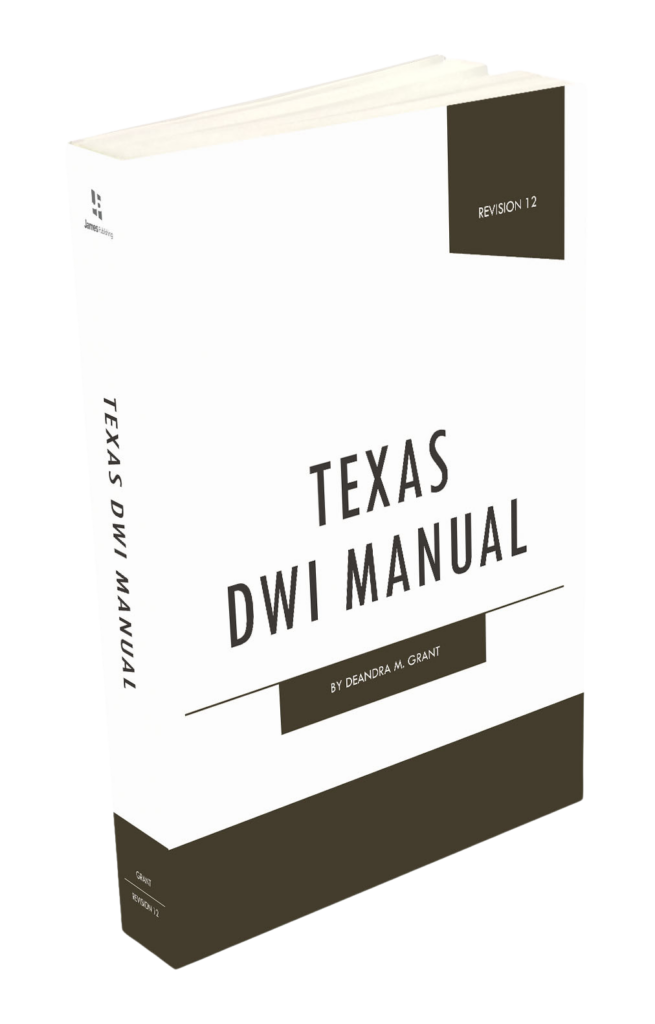
The Texas DWI Manual
Get the Book
Surviving Your DWI in McLennan County
Get the Book
Surviving Your DWI in Bell County
Get the Book
Surviving Your DWI in Hays County
Get the Book
Surviving Your DWI in Tarrant County
Get the Book
Surviving Your DWI in Travis County
Get the Book
Surviving Your DWI in Kaufman County
Get the Book
Surviving Your DWI in Rockwall County
Get the Book
Surviving Your DWI in Ellis County
Get the Book
Surviving Your DWI in Grayson County
Get the Book
Surviving Your DWI in Cooke County
Get the Book
Surviving Your DWI in Collin County
Get the Book
Surviving Your DWI in Denton County
Get the Book
Surviving Your DWI in Dallas County
Get the BookBlogs
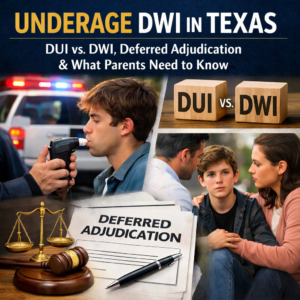
Underage DWI in Texas: DUI vs. DWI, Deferred Adjudication, and What Parents Need to Know
Read Article
Texas Zero Tolerance Law for Drivers Under 21
Read ArticleVideos

Underage DWI Arrest in Texas: What to Know
Watch the Video