

Overview
Federal financial crime prosecutions are long, resource-intensive cases built on documentary evidence such as financial records, account statements, loan applications, emails, electronic transfers, and tax filings. Federal investigators from the FBI, IRS Criminal Investigation, the Secret Service, the FDIC Office of Inspector General, and HSI have months or years to build these cases before anyone is arrested. By the time charges are filed, the government’s evidentiary record is typically extensive.
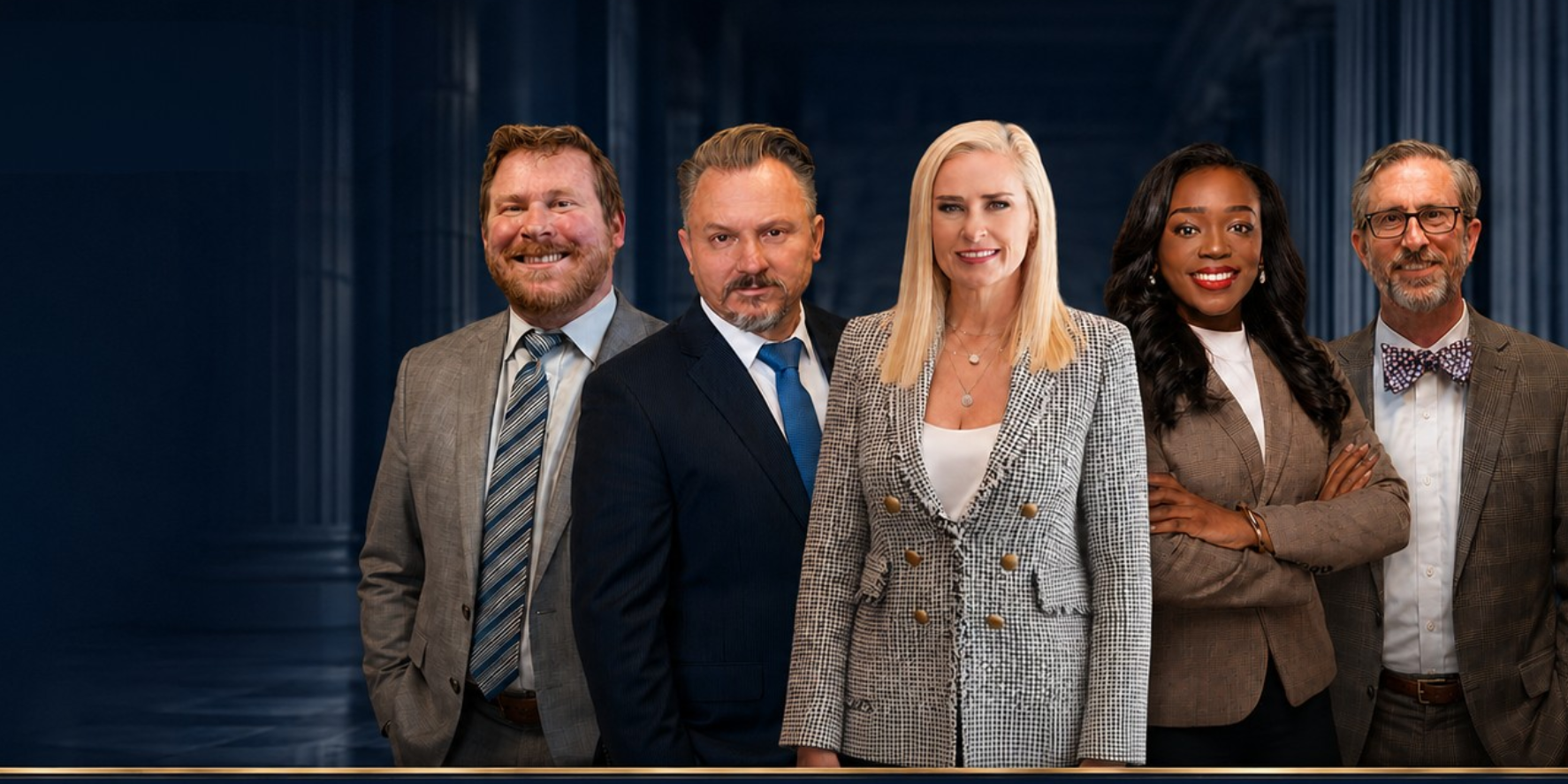
Of Counsel James Lee Brightleads Deandra Grant Law’s federal criminal defense practice and has defended clients against the full spectrum of federal financial crime charges for more than 25 years. He is admitted to all four Texas federal districts, the District of Columbia, the Fifth Circuit, and the U.S. Supreme Court. PartnerDouglas Huff has completed advanced digital forensics training, directly applicable to the electronic evidence (emails, electronic transfers, account records, and metadata) that drives most federal financial crime prosecutions.
Federal Bank Fraud — 18 U.S.C. §1344
Federal bank fraud is a specific offense defined by 18 U.S.C. §1344, not a general category that encompasses all financial crimes. The statute creates two theories of liability:
Clause 1 — Scheme to defraud a financial institution: Knowingly executing or attempting to execute a scheme or artifice to defraud a financial institution. This requires proof of a fraudulent scheme, an intent to defraud, and a financial institution as the target.
Clause 2 — Scheme to obtain money by false pretenses: Knowingly executing or attempting to execute a scheme to obtain money, funds, credits, assets, securities, or other property owned by or under the custody or control of a financial institution by means of false or fraudulent pretenses, representations, or promises.
A conviction under either clause carries up to 30 years in federal prison and a fine up to $1,000,000. The 30-year maximum reflects Congress’s view of bank fraud as a serious threat to the financial system.
Common bank fraud fact patterns prosecuted in Texas include check kiting (exploiting float between accounts to create artificial balances), account takeover fraud, insider fraud by bank employees, mortgage fraud, and fraudulent loan applications. Each involves distinct evidentiary challenges and defense arguments.
The intent element is where bank fraud cases are most often defended. The government must prove that the defendant knowingly executed a scheme to defraud in that the misrepresentations were intentional rather than negligent, that the defendant understood the statements were false, and that they intended to cause loss. Business disputes, accounting errors, reliance on advisors, and genuine misunderstandings about financial products have all been raised as defenses to the intent element in bank fraud prosecutions.
Related Federal Financial Crimes: The Sub-Page Structure
Federal prosecutors rarely charge bank fraud alone. These charges are almost always accompanied by related offenses that expand sentencing exposure and provide additional theories of liability. Each of the following has its own page with detailed analysis:
Wire Fraud — 18 U.S.C. §1343
Wire fraud is the most broadly applicable federal fraud statute. It reaches any scheme to defraud that uses any interstate wire communication — email, phone call, text message, or electronic transfer. Because virtually all modern financial transactions involve some form of interstate wire communication, wire fraud is the most commonly charged financial crime in federal court. It carries up to 20 years (30 years if a financial institution is involved), and prosecutors stack it with bank fraud charges routinely.
Money Laundering — 18 U.S.C. §1956 and §1957
Money laundering charges are filed when the government alleges that proceeds from a specified unlawful activity (bank fraud, drug trafficking, or other predicate offenses) were concealed, transported, or spent in ways designed to hide their criminal origin. §1956 (concealment laundering) carries up to 20 years. §1957 (spending laundering — transactions over $10,000 in criminally derived property) carries up to 10 years. Money laundering charges dramatically expand sentencing exposure in financial crime cases and are frequently added to bank fraud and wire fraud indictments.
Federal Loan Fraud — 18 U.S.C. §1014
18 U.S.C. §1014 specifically prohibits making false statements to influence the action of federally insured financial institutions on loan applications, credit applications, and related transactions. It carries up to 30 years. Loan fraud prosecutions frequently arise from mortgage fraud, SBA loan fraud (including COVID-era EIDL and PPP fraud), and commercial loan misrepresentations. The false statement element requires proof that the statement was knowingly false — not merely inaccurate or the result of professional advice the defendant relied on.
Tax Fraud — 26 U.S.C. §7201 and Related Statutes
Federal tax fraud encompasses tax evasion (§7201, up to 5 years), filing a false return (§7206, up to 3 years), failure to file (§7203, up to 1 year), and employment tax fraud. Tax fraud cases are investigated by IRS Criminal Investigation (IRS-CI) and prosecuted by the Tax Division of the Department of Justice or by U.S. Attorneys’ offices. The willfulness element (the defendant must have known they had a legal duty and deliberately violated it) is the central defense issue in most tax fraud prosecutions.
How Federal Financial Crime Cases Are Built
Understanding how these cases are investigated and prosecuted is essential to understanding where the defense has room to operate.
Grand jury subpoenas. Federal financial crime investigations almost always begin with grand jury subpoenas for bank records, financial statements, tax returns, loan files, and email records. By the time charges are filed, the government has obtained records from dozens of sources. The defense must obtain and independently review this documentary record to identify inconsistencies, exculpatory documents, and evidence of legitimate business purpose that the government may have overlooked.
Cooperating witnesses. Financial crime prosecutions frequently involve cooperating witnesses such as business partners, employees, accountants, or co-defendants who have entered cooperation agreements. Their testimony about the defendant’s intent, knowledge, and role in the alleged scheme is subject to the same credibility challenges that apply to cooperators in any federal case: the cooperation agreement itself, the benefits received, prior inconsistent statements, and the extent to which the testimony is corroborated by independent documentary evidence.
Expert witnesses. The government typically presents a forensic accountant or financial expert to summarize complex financial records and explain the alleged fraud scheme to the jury. The defense is entitled to retain its own financial expert and to cross-examine the government’s expert on methodology, assumptions, and the alternative explanations for the financial patterns identified.
Digital evidence. Emails, electronic transfers, account records, and metadata are the evidentiary foundation of virtually every federal financial crime case. Doug Huff’s Garrett Discovery forensics training covers the authentication, completeness, and chain of custody requirements for this evidence under the Federal Rules of Evidence. Selective production of email records, incomplete financial data, and attribution questions about electronic communications are all grounds for challenge at the data level.
Why Deandra Grant Law for Federal Financial Crime Defense
- 25+ years of federal financial crime defense — James Lee Bright. Bank fraud, wire fraud, money laundering, loan fraud, and tax fraud across all four Texas federal districts.
- Digital forensics — Douglas Huff. Email records, electronic transfers, financial data, and metadata examined at the technical level.
- Federal court admissions: all four Texas districts, D.C., Fifth Circuit, U.S. Supreme Court.
- 30+ years of criminal defense. 500+ trials to verdict.
- Texas Super Lawyer since 2011. AV® Preeminent rated by Martindale-Hubbell®.
If you are facing federal bank fraud, wire fraud, money laundering, loan fraud, or tax fraud charges in Texas, call (214) 225-7117 for a free, confidential consultation with James Lee Bright. Or schedule online at texasdwisite.com.
Attorneys Who Handle This Charge
Meet the attorneys who will personally handle your bank fraud defense.


Offices Handling These Cases
Find the Deandra Grant Law office nearest you for bank fraud defense across Texas.

Allen
1333 W. McDermott Drive, Suite 180, Allen, TX 75013 Visit This Office
Dallas (HQ)
3300 Oak Lawn Avenue, Suite 700, Dallas, TX 75219 Visit This Office
Denton
1317 E. McKinney Street, Suite 101A, Denton, TX 76209 Visit This Office
Fort Worth
4500 Airport Freeway, Suite 101, Fort Worth, TX 76117 Visit This Office

Waco
605 Austin Avenue, Suite 5, Waco, TX 76701 Visit This OfficeCourthouses We Appear In
Courthouses where our attorneys represent clients facing this charge across Texas.
Bell County Courts
Everything you need to know about criminal court in Bell County, Texas: where cases are heard at the…
View Courthouse Info
Collin County Courts
Everything you need to know about criminal court in Collin County, Texas: where cases are heard at the…
View Courthouse Info
Cooke County Courts
Everything you need to know about criminal court in Cooke County, Texas: where cases are heard in Gainesville,…
View Courthouse Info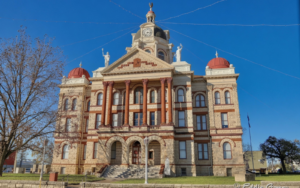
Coryell County Courts
Everything you need to know about criminal court in Coryell County, Texas: where cases are heard in Gatesville,…
View Courthouse Info
Dallas County Courts
Everything you need to know about criminal court in Dallas County, Texas: where cases are heard at the…
View Courthouse Info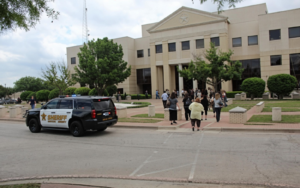
Denton County Courts
Everything you need to know about criminal court in Denton County, Texas: where cases are heard at the…
View Courthouse Info
Ellis County Courts
Everything you need to know about criminal court in Ellis County, Texas: where cases are heard at the…
View Courthouse Info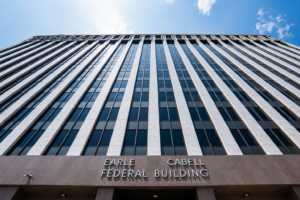
Federal Courts
Deandra Grant Law defends federal criminal cases across all four federal districts in Texas, the District of Columbia,…
View Courthouse Info
Johnson County Courthouse
Everything you need to know about criminal court in Johnson County, Texas: where cases are heard at the…
View Courthouse Info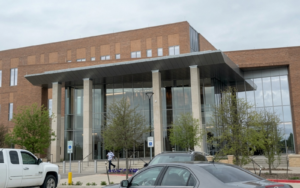
Kaufman County Courts
Everything you need to know about criminal court in Kaufman County, Texas: where cases are heard at the…
View Courthouse Info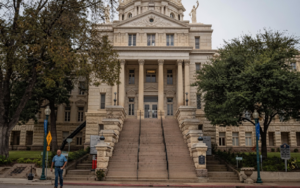
McLennan County Courts
Everything you need to know about criminal court in McLennan County, Texas: where cases are heard at the…
View Courthouse Info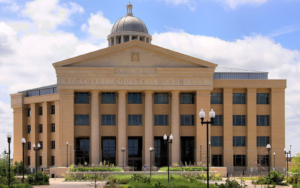
Rockwall County Courts
Everything you need to know about criminal court in Rockwall County, Texas: where cases are heard at the…
View Courthouse Info