dismissed
Unlawfully Carrying a Weapon
Unlawful carrying of a weapon charge dismissed

Deandra Grant Law - Criminal & DWI Defense defends weapon charges that put your rights and your freedom at risk
Federal weapons charges are among the most aggressively prosecuted offenses in the Northern District of Texas. The ATF, FBI, and local task forces investigate and prosecute firearms offenses ranging from prohibited person possession to large-scale gun trafficking operations. These cases carry mandatory minimum sentences that can add years or decades to any existing charges, and they are often used as leverage to pressure defendants into cooperation agreements.
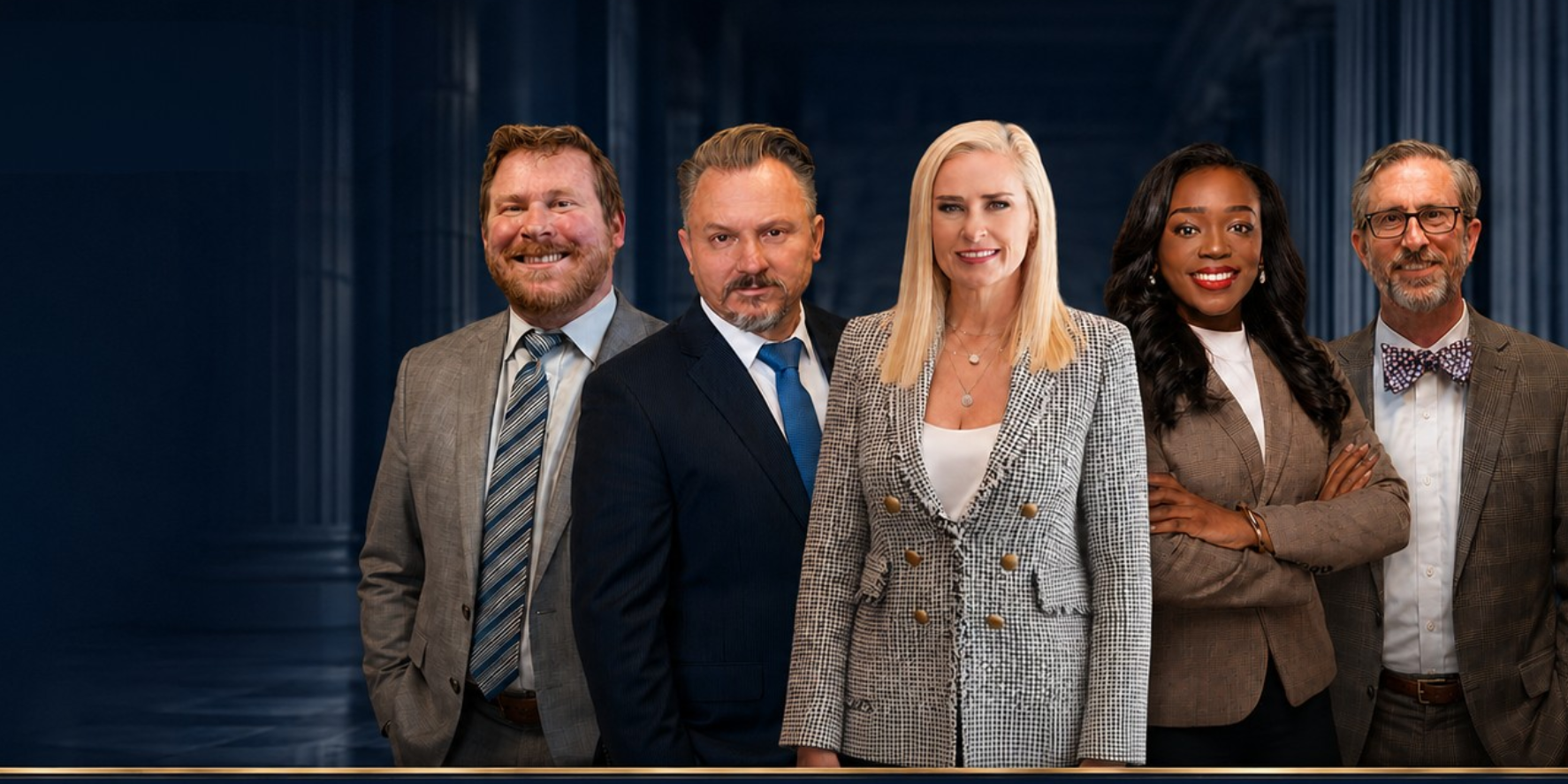
At Deandra Grant Law, Attorney James Lee Bright leads our federal weapons defense. Lee has more than 25 years of federal trial experience, including a nationally prominent three-month federal trial in the District of Columbia. He is admitted to practice in all four federal districts in Texas, the District of Columbia, the Fifth Circuit, and the U.S. Supreme Court, giving him the broadest possible federal practice footprint.
Many federal weapons cases allege “constructive possession” rather than actual possession. Lee challenges these arguments by examining whether the firearm was in a shared space accessible to multiple people, whether the government can prove actual knowledge, whether forensic evidence (fingerprints, DNA) connects the defendant to the weapon, and whether the theory of possession is supported by physical evidence or relies solely on inference.
The defense needs to evaluate the reliability of ballistic matching evidence, chain of custody for seized firearms, ATF trace documentation, and whether forensic ballistics conclusions are supported by the physical evidence. The 2016 PCAST report found that firearms and tool mark identification has not been shown to meet scientific standards for foundational validity, and the false positive rate documented in empirical studies is not negligible. That analysis applies directly to cases where ballistic matching is offered against a defendant.
The constitutional framework governing §922(g) charges has changed fundamentally since the Supreme Court’s 2022 decision in New York State Rifle & Pistol Association v. Bruen. What was once a settled area of law is now one of the most active areas of constitutional litigation in the federal courts, with the Fifth Circuit at the forefront.
In United States v. Diaz (5th Cir. 2024), the Fifth Circuit held that Bruen abrogated its prior precedent upholding §922(g)(1) categorically against Second Amendment challenge. Under Diaz, simply classifying a crime as a felony does not automatically satisfy the government’s burden. Instead, the government must demonstrate that applying §922(g)(1) to the specific defendant is consistent with this nation’s historical tradition of firearm regulation. The Supreme Court denied certiorari in Diaz in 2025, making it binding precedent throughout the Fifth Circuit.
The Fifth Circuit has since developed a framework distinguishing among types of predicate felonies:
§922(g)(3) (which prohibits possession by unlawful users of controlled substances) has been separately challenged. The Fifth Circuit held in Daniels v. United States and related cases that §922(g)(3) can be unconstitutional as applied. The Supreme Court has granted certiorari in Hemani v. United States to address these §922(g)(3) challenges, and that decision is expected to significantly affect §922(g)(3) prosecutions.
Every §922(g) case in the Northern District of Texas should be evaluated for available Bruen-based constitutional challenges. The viability of a challenge depends on the nature of the predicate conviction and the specific facts of the defendant’s history. Lee evaluates each case individually for facial and as-applied challenges under the current Fifth Circuit framework.
Many weapons cases begin with a search. Lee evaluates the legality of every search and seizure and files suppression motions when the evidence supports them. Fourth Amendment challenges to the stop, the search, and the seizure of the firearm are often the most productive early defense in §922(g) cases arising from traffic stops or probation searches.
The Armed Career Criminal Act can increase a felon-in-possession sentence from a maximum of 15 years to a mandatory minimum of 15 years when the defendant has three prior qualifying convictions for “violent felonies” or “serious drug offenses.” Determining whether prior convictions qualify as ACCA predicates is one of the most technically complex areas of federal sentencing law. The Supreme Court’s decision in
Wooden v. United States (2022) and subsequent circuit decisions have continued to refine which prior convictions count, how the “categorical approach” applies, and when prior convictions can be challenged. Lee reviews every predicate conviction for ACCA qualification, including whether restoration of civil rights has occurred and whether any conviction is legally insufficient to serve as an ACCA predicate.
Federal weapons sentencing is driven by the United States Sentencing Guidelines Chapter 2K. Base offense levels depend on the type of firearm, the defendant’s prior record, and the circumstances of the offense. Enhancements apply for stolen firearms, firearms with obliterated serial numbers, trafficking, and connection to another felony. The §924(c) mandatory consecutive sentence runs on top of whatever sentence is imposed for the underlying offense. It cannot be run concurrently.
Effective federal weapons defense requires both attacking the charges and, where a conviction is likely, building the strongest possible mitigation for sentencing. Lee’s experience across all four Texas federal districts means familiarity with the sentencing practices of specific judges and the approaches of specific U.S. Attorney’s offices that are essential to effective representation at the sentencing phase.
James Lee Bright is one of the most experienced federal criminal defense attorneys in the Dallas-Fort Worth area, with more than 25 years of practice focused on federal criminal cases.
Contact Deandra Grant Law for a free, confidential consultation with Attorney James Lee Bright. We serve clients in the Northern, Eastern, Southern, and Western Districts of Texas, the District of Columbia, and the Fifth Circuit Court of Appeals.
Call (214) 949-4295 or schedule an appointment online.
Real results from the weapons cases our team has defended across Texas.
Unlawful carrying of a weapon charge dismissed
Unlawful carrying of a weapon charge dismissed
Unlawful carrying of a weapon charge dismissed
Unlawful carrying of a weapon charge dismissed
Unlawful carrying of a weapon charge dismissed
Unlawful carrying of a weapon charge dismissed
Prior results do not guarantee a similar outcome. Each case is unique.
Meet the attorneys who will personally handle your weapons charge defense.






Find the Deandra Grant Law office nearest you for weapons-charge defense in Texas.


Courthouses where our attorneys represent clients facing this charge across Texas.
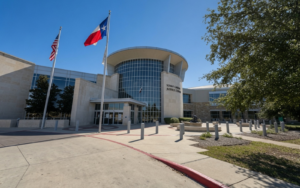
Everything you need to know about criminal court in Bell County, Texas: where cases are heard at the…
View Courthouse Info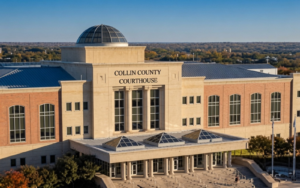
Everything you need to know about criminal court in Collin County, Texas: where cases are heard at the…
View Courthouse Info
Everything you need to know about criminal court in Cooke County, Texas: where cases are heard in Gainesville,…
View Courthouse Info
Everything you need to know about criminal court in Coryell County, Texas: where cases are heard in Gatesville,…
View Courthouse Info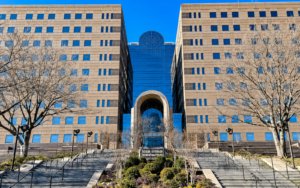
Everything you need to know about criminal court in Dallas County, Texas: where cases are heard at the…
View Courthouse Info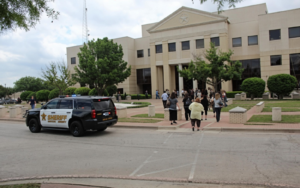
Everything you need to know about criminal court in Denton County, Texas: where cases are heard at the…
View Courthouse Info
Everything you need to know about criminal court in Ellis County, Texas: where cases are heard at the…
View Courthouse Info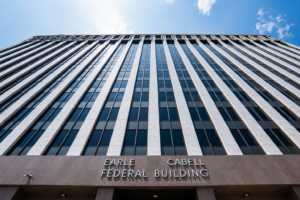
Deandra Grant Law defends federal criminal cases across all four federal districts in Texas, the District of Columbia,…
View Courthouse Info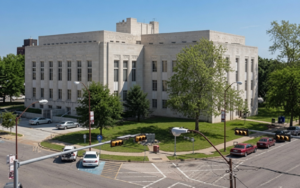
Everything you need to know about criminal court in Grayson County, Texas: where cases are heard in Sherman,…
View Courthouse Info
Everything you need to know about criminal court in Johnson County, Texas: where cases are heard at the…
View Courthouse Info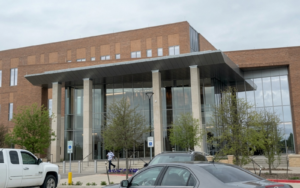
Everything you need to know about criminal court in Kaufman County, Texas: where cases are heard at the…
View Courthouse Info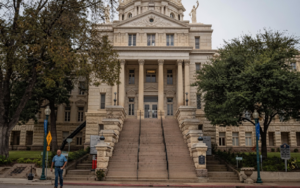
Everything you need to know about criminal court in McLennan County, Texas: where cases are heard at the…
View Courthouse Info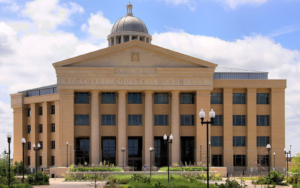
Everything you need to know about criminal court in Rockwall County, Texas: where cases are heard at the…
View Courthouse Info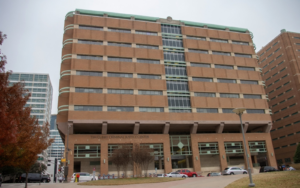
Everything you need to know about criminal court in Tarrant County, Texas: where cases are heard at the…
View Courthouse InfoEvery case starts with a conversation. Reach out today and put an experienced, trial-tested team in your corner. We’re available 24/7 across all six Texas offices.
Tell us what happened. We’ll respond within one business hour.
Submitting this form does not create an attorney-client relationship. All communications are confidential.